


-
The Cat’s Meow: What Is My Cat Telling Me?
Posted on May 28th, 2013Cats are great at communicating and use their entire body to tell you how they feel or what they want. Some may not be too inclined to vocalize their opinions through a meow, while others may be a chatty Cathy.
Every kitty is born with their own baseline noisiness – some breeds are chattier than others such as the Siamese. A large amount of meows in cats is likely due to human behavior. If a cat meows because he wants to be fed, he will keep meowing until he gets food. If food is never given when he meows, he would be less vocal.
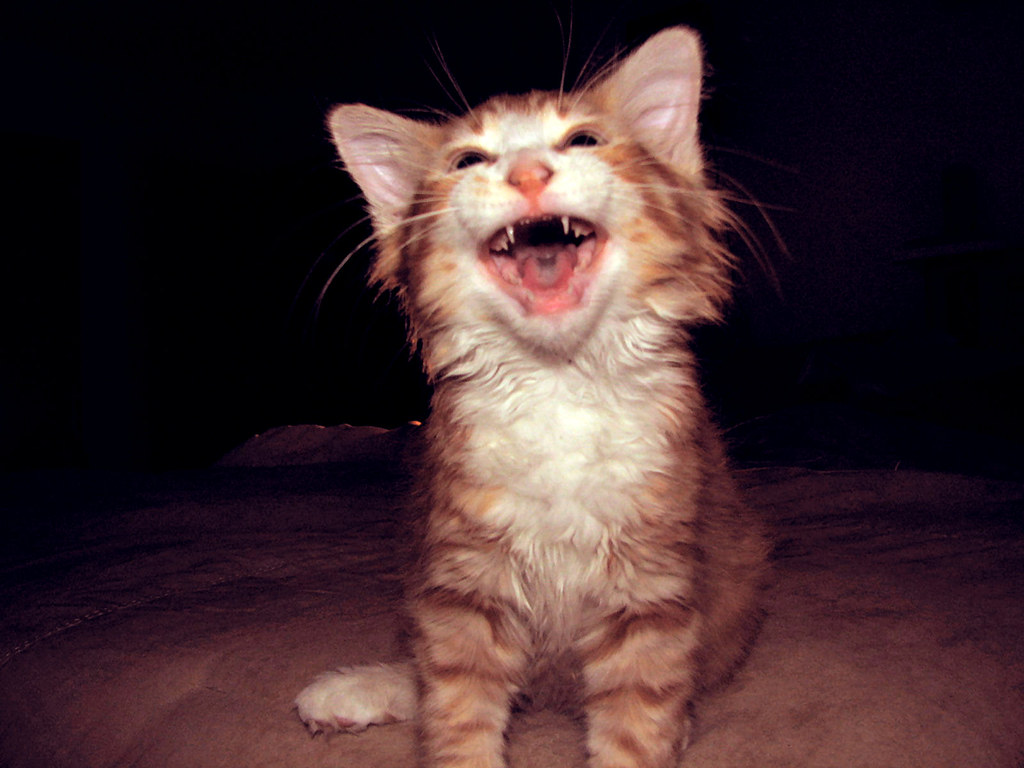
It is possible to talk to your cat more to encourage him to talk back. Reinforce him meowing by giving him something he wants, such as to open a door or giving him a treat. If your cat talks too much, teach him to do something that doesn’t involve meowing, such as walk in a circle, to get a treat. If you give your kitty attention each time he meows, he will know a meow is the key to getting noticed.
Keep in mind, excessive meowing can sometimes indicate pain, anxiety or another medical issue. If you are in doubt, consult your veterinarian.
The following are some reasons why your cat meows:
- Illness. The first step is a thorough checkup by your veterinarian. Numerous diseases can cause a cat to feel hunger, thirst, or pain, all of which can lead to excessive meowing.
- Attention seeking. Despite what some people think, cats don’t like being alone a lot. Cats often meow to initiate play, petting, or to get you to talk to them.
- Wants food. Some cats meow every time someone walks in the kitchen, hoping to get a bite. And many cats become very vocal when it gets close to their feeding times. If this is your problem, don’t feed your cat when she cries.
- Greeting you. Many cats meow when their people come home, or even when they just meet them in the house.
- She’s lonely. If your pet spends too many hours a day alone, think about getting a pet sitter to drop in during the day, or find other ways to enrich your pet’s life.
- A stressed cat. Cats that are experiencing stress often become more vocal. A new pet or baby, a move or changes to the home, an illness or the loss of a loved one can turn your cat into a talker.
- Aging cats. Cats, just like people, can suffer from a form of mental confusion, or cognitive dysfunction, as they age. They become disoriented and often cry plaintively for no apparent reason, especially at night.
- Cats that want to breed. If your cat isn’t spayed or neutered, then you’re going to hear a lot more noise. Females yowl when in heat, and males yowl when they smell a female in season. Get your pet spayed or neutered.
-
A Healthy Bird Is A Happy Bird!
Posted on May 24th, 2013How to keep your pet bird happy and healthy.
The crew at Clear The Air loves all animals and we know birds are a popular pet amongst Americans. We would like to share some helpful tips to keeping your bird happy and healthy.
Remember to use Clear The Air’s Pet Odor Eliminator to sprinkle at the bottom of your bird‘s cage to eliminate any odors. Our products are 100% non toxic and completely safe around animals and children even if consumed.
- Your Bird’s Home: Make sure to keep your bird indoors inside a cage or small aviary and that your bird is able to find a cool area when the heat rises in the warmer months of the year. If you are moving your bird, make sure to make the adjustment of temperature a gradual one. Birds do not like sudden changes in temperature. Keep your bird in an area with circulating air.
- Your Bird’s Feed: Purchase high quality bird seed or pellets. Birds also like lettuce and fruit for variety. Make sure not to feed your bird apple seeds and onions. You want to also make sure you have a container for fresh water and another for bath water.
- Your Bird’s Temperature: Birds can regulate their body temperature through water evaporation like panting, throat vibrations as well as through their feed and the surface of their skin. If you place your bird’s cage in front of a window, make sure the sun’s rays are not overheating your bird.
- Your Bird’s Health: If your bird has stopped grooming itself, loses his appetite and does not sit on top of his perch, he may be ill. Make sure you take your bird to the veterinarian immediately. Birds, just like dogs and cats, need regular veterinary care.
- Your Bird’s Friends: It is important to spend time with your bird and let him get to know your voice and face. Birds usually like having another bird for company. In most cases a male and female bird in the same cage will work.
- Your Bird’s Wings: Your bird’s wings need to be clipped so it will not fly away. If you have your bird’s wings clipped you can take him outside with you. Use caution as your bird will probably try to fly because he is in open air.
- Your Bird’s Exercise: Exercise your bird by holding them on a stick and moving it carefully up and down so your bird opens his wings for balance. You can also place a treat a short distance from your bird so he has to walk to get it. Also make sure you have fun toys in his cage that will intrigue him and keep him entertained mentally and physically.
-
The Marines Working Hard To Save Tortoises
Posted on May 20th, 2013Check out this great article from the Wall Street Journal about our marines saving the desert tortoises.
Such a great article about our Marines saving the Desert Tortoises! This article is from The Wall Street Journal.

The Few, the Proud, the Tortoises: Marines Protect Endangered Species
TWENTYNINE PALMS, Calif.—U.S. Marines are taught to overcome obstacles with a minimum of help. But when some Marines prepared to charge a hill in a training exercise here a few months ago, they were forced to halt and radio the one man who could help them advance: Brian Henen, turtle expert.
The troops were “running up the hill and firing at targets,” Mr. Henen said. “Some of the tortoises like the hill also. The Marines don’t want to hurt the tortoise, so they call us and we go in and move it.”
Mr. Henen, who has a doctorate in biology, is part of a little-known army of biologists and other scientists who manage the Mojave desert tortoise and about 420 other threatened and endangered species on about 28 million acres of federally managed military land.
“There’s a lot of people who don’t recognize the amount of conservation the Marine Corps does,” said Martin Husung, a natural-resource specialist on the base. “A lot of people think we’re just running over things.”
Instead, Mr. Henen often hustles out to remote parts of the Mojave Desert to make sure the threatened desert tortoise, which can weigh 10 pounds and live to be more than 50 years old, isn’t frightened by charging troops.
“When they get scared, they pee themselves,” Mr. Henen said, referring to the tortoises. Since tortoises can go two years between drinks of water, an unplanned micturition can cause dehydration and even death. So Mr. Henen sometimes demonstrates to troops how he soaks the reptiles in a pool until they drink enough water to plod on with their lives.
The tortoise isn’t the only animal benefiting from the limited hunting, high security and trained biologists on many bases. On the Navy’s San Clemente Island, biologists protect vulnerable loggerhead shrikes from hungry rats by installing metal “rat flashings” at the base of trees the birds nest in. In Texas, the Army creates protective nesting environments for endangered golden-cheeked warblers to fend off incursions by brown-headed cowbirds. And at Arnold Air Force Base in Tennessee, the once-endangered Helianthus eggertii, or Eggert’s sunflower, is doing so well it has been taken off the endangered list.
Congress ordered the Defense Department to protect the flora and fauna on its lands under the 1960 Sikes Act. Today, the military works with agencies like the Fish and Wildlife Service, a bureau of the Interior Department, to search for and protect animals, plants and archaeological sites on its bases.
At Fort Benning, an Army base near Columbus, Ga., gunfire and explosions regularly set off fires in the pine trees, said John Brent, the base environmental manager. Oddly enough, this is a boon for the red-cockaded woodpecker, a bird on the endangered species list that has made a comeback there.
The finicky woodpecker typically lives in longleaf pines at least 60 years old. The tree thrives on forest fires. “It needs fire to germinate and grow,” Mr. Brent said.
Outside the base, civilian agencies have long tried to prevent forest fires, and that ultimately hurts the pine population. Elsewhere, forest lands are disappearing amid rapid development.
All of this has the birds flocking to the base, Mr. Brent said. To help welcome the new tenants, Mr. Brent and others have been building bird “condominiums,” Mr. Brent said. For this they cut a hole about the size of a loaf of bread in an existing tree and slide in a cedar box to accommodate a nest. They can only do this once per tree because these picky birds prefer “condos, not townhouses,” Mr. Brent said.
“It’s a well-kept secret” that biologists are drawn to work on military bases, Mr. Brent said. “There’s a chance to do terrific work.”
Last year, the Department of Defense spent nearly $70 million on threatened and endangered species management and conservation, including $16.5 million on the red-cockaded woodpecker and just under $6 million on the desert tortoise.
The outlays let biologists survey habitats, tag and track animals, build hatcheries and provide ecological training to thousands of troops.
At Fort Irwin, an Army base near Barstow, Calif., Clarence Everly bumped along a dirt trail in a Dodge Ram pickup. The former Airborne Ranger is now the natural and cultural resources manager on base.
“Having been in the Army, it gives you some street cred” dealing with soldiers and the chain of command, he said. “You’re not just the environmentalist guy trying to prevent them from doing training.”
He drove out to meet a team of biologists from the U.S. Geological Survey on a 10-acre restricted area where lonely Joshua trees shook in 50 mile per hour winds.
This “is a great resource,” said Christina Aiello, a USGS scientist and Ph.D. student from Penn State University, trying to yell over the gusts of wind. “Blocking off areas, restricting access, it’s safe and secure and there’s no public access.”
She is part of a team doing research on how tortoises interact socially. She said their research is “like Facebook” as they track friend circles in the tortoise group.
Back at Twentynine Palms, Ken Nagy, a professor emeritus in biology from UCLA studying the reproductive habits of the reptiles, held a baby tortoise in one hand, its shell still soft.
They are like “walking ravioli” to predators, he said. A fenced-off section of the base covered by netting helps overcome the high mortality rate for young tortoises in the wild. Mr. Nagy’s program helps protect juveniles from birds and allows for research in a natural habitat.
Other parts of the military’s domain aren’t exactly natural but still offer the animals military-style protection.
On Fort Irwin, Mr. Everly peered through the window of his pickup at some targets in the distance—home to a surprisingly large tortoise population. “In essence, the live-fire ranges are protection for the tortoises,” he said, looking at a patch of ground where bullets often rain down but rarely hit the burrowing reptile. “Nobody goes out there.”
Check out the entire article here: http://online.wsj.com/article/SB10001424127887323798104578452941180687984.html?mod=wsj_valettop_email
-
The Key Tips To Bunny Care
Posted on May 8th, 2013Did you know a rabbit can be trained to use a litter box, come when you call them and sometimes play tag with you? Domestic rabbits make great pets and if well cared for, indoor rabbits can live for seven to ten or more years.
Clear the Air would like to share some helpful tips to caring for your bunny rabbit:

- Bunnies should be kept indoors in a cage large enough from him to move freely. If you have a wire cage, it is a good idea to cover the bottom with a piece of wood or corrugated cardboard since wire bottoms can ulcerate your rabbit’s feet. For bedding, you can use hay, aspen shavings or straw so he can make a cozy nest.
- Sprinkle Clear The Air at the bottom of their cage to eliminate any odors caused by your bunny. Our product is 100% non-toxic and safe even if ingested.
- Your rabbit’s diet should consist mostly of grass hay, such as timothy or brome. This helps keep his intestinal tract healthy and unlimited hay should be available at all times. You should also feed your bunny rabbit pellets that are of good quality. Fresh leafy greens are the third important component of your pet’s diet such as turnip greens, carrot tops, collard greens or dark leaf lettuces.
- Always have clean fresh water available for your rabbit.
- Rabbits will do their best to keep their living quarters clean as they are very clean animals by nature. They will usually choose one corner in their cage as their bathroom. To help litter train your bunny, once you see where his bathroom area he has chosen is, put a newspaper lined litter box in that corner. Fill it with pelleted newspaper litter. Don’t use pine or cedar shavings as these fumes can cause problems to your rabbits liver enzymes.
- Brush your bunny regularly and handle him often very gently and he will become a wonderful family pet!
-
7 Steps To Your Pets’ Healthy Life
Posted on May 2nd, 2013Tips for a healthy dog and cat.
Here at Clear the Air, we love our pets and want to provide them with a long and happy life. We would like to share some tips on keeping your pets’ happy and healthy.
Do you have any tips you’d like to share? Comment on our blog!
Regular Vet Visits – Just like a human, your pet can get heart problems or have arthritis. Prevent any issues by taking your pet to the vet to prevent any issues or catch them early.
- Spay And Neuter – Sadly 8-10 million pets end up in US shelters every year. An easy way to stop that number from growing is to spay and neuter your cats and dogs. Not only does spaying and neutering cut down on the number of unwanted pets, it also can lower the risk of certain cancers and can reduce the risk of a pet getting lost by lowering the tendency to roam.
- Parasite Prevention – Fleas and ticks are the most common external parasite to plague pets. Fleas can lead to irritate skin, hot spots, infection and hair loss. If your pet swallows a flea, it can end up with tapeworms. Year round prevention of parasites is important to your pets’ health.
- Weight Control – Just like humans, obesity in pets in dangerous to your health. Do not over feed your pet. They need far fewer calories than most of us think. Ask your vet for feeding instructions.
- Enriched Environment – Mental simulation for your pet is key to long term health and welfare for your cat and dog. Daily walks for dogs and scratching posts, window perches and toys for your cats are great for your pets.
- Dental Care – Pets can suffer from gum disease, tooth loss and tooth pain. Make sure to keep up on regular brushing and oral cleanings to make sure your pets’ teeth stay healthy and clean.
- No People Medication – Medicines for humans can kill your pet. The most common pet poisoning culprits are ibuprofen and naproxen. They can cause kidney damage, seizures and cardiac arrest in a dog or cat.
-
Does Your Dog Bed Smell?
Posted on May 1st, 2013How to eliminate doggy bed odors.
A lot of times our dog beds will acquire that good old “doggy smell” and although our dogs may think it smells heavenly, sometimes it’s nice to eliminate the odor so you can’t smell it laying in your bed!
What we recommend is taking apart your dog bed (should you have a cover on it) and throw it in the wash along with any blankets your dog may use in his bed.
After you wash and dry your dog’s bedding, we recommend sprinkling our Clear the Air Furniture Odor Eliminator on the padding before zipping up the cover around the dog’s bedding. Your dog’s bed should smell fresh and with Clear the Air in your dog’s bed, the doggy odor will stay away for longer.
If your dog bed cover can not be unzipped and separated from the padding within the bed, place your dog’s bed outside in a well ventilated area and sprinkle Clear the Air Furniture Odor Eliminator all over the bedding. Leave on the bed for 24 hours and when done, shake out the granules and vacuum any leftover granules.
It is also a good idea to hang our Clear the Air Odor Eliminator Bags above your dog’s bed to absorb any “doggy” odors your dog may leave behind.
Do you have any questions about eliminating odors? Please comment on our blog or contact our customer service agent!
-
Prepare Your Dog for a New Baby
Posted on April 24th, 2013Tips to get your dog ready for a new baby.
Bringing home a new baby can be stressful on your pets, especially if you have always treated them like your “babies”! Check out Adopt A Pet’s helpful tips on bringing home a new baby and how to prepare your dog for the new family addition.

What does your dog expect when you’re expecting? We’ve heard stories of dogs curling around pregnant bellies, stealing baby toys, and many other silly and wonderful stories from our pregnant friends and family about their dogs behavior when a human baby is on the way! Our friends over at Bark Busters —the world’s largest dog training company—offers tips to help families ensure a smooth transition for their dog when bringing home a new baby.
If you are expecting a baby and you have a dog, take time now to prepare your dog for the day you bring home your new child. “Dogs can feel rejected and become confused or stressed when parents suddenly shift their attention from dog to baby,” said Liam Crowe, CEO and master dog behavioral therapist of Bark Busters USA. “A dog doesn’t understand why a baby is being elevated above the dog in the pack. In trying to regain his pack position, the dog may seek attention through behaviors such as barking at the baby’s cries, jumping up, or chewing on baby’s things.”
Head on over to the BarkBuster’s Tips to Help Prepare Your Dog for the Arrival of a New Baby for help reducing bad behavior, easing everyone’s stress, and help to keep baby safe.
-
Should You Free-Feed Your Cat?
Posted on April 19th, 2013Feeding tips for your cat.
Do you wonder how much your cat should eat? Is your cat overweight? Check out some helpful tips below to find out what type of feeding schedule your cat should be on:
Age: Of course age makes a huge difference in how often your cat should eat. Kittens require more food per pound of body weight to support growth than adult cats do. Kittens should be fed more often throughout the day. Kittens up to six months of age may require three meals a day. Once an adult, a cat can get fed once or twice a day. Senior cats age seven and above, should maintain the same feeding schedule.

Health: If your cat suffers from a health problem like diabetes, you may need to feed him depending on when his insulin he is administered. It is best to check with your veterinarian. If your cat has hyperthyroidism, he may want to eat all the time. When a cat ages, his teeth may go bad or may develop gum disease making it difficult to chew dry food. If this is the case, offering wet food is usually best. Or you can mash up dry food in the wet food to make it easier for your cat to chew his food.
Dry vs. Wet Food: Feeding only dry food is fine as long as it is complete and balanced. Cats that only eat dry food must be provided with lots of fresh water, especially if they are prone to developing urinary tract issues. It is usually a good idea to provide both dry and wet food to your cat.
Schedule: Pick a time that is easiest for you to prepare your cats meal. If mornings work best, make that a time you can give him his wet food. Once you start doing that for a couple days, your cat will already know his schedule and expect his food in the morning.
Do you have questions about feeding your cat? Please comment on our blog!
-
Why Does My Cat Have Whiskers?
Posted on April 15th, 2013What does a cat use its whiskers for?
Whiskers are a very important part of your cat’s body. Whiskers, like hair and nails, fall out and are replaced.
Whiskers are different from your cat’s body hair. They are two to three times thicker than your cat’s hair and are rooted very keep in your cat’s face into an area which is rich in nerves and blood vessels.
Cats have whiskers on their checks as well as shorter ones above their eyebrows, on their chin and on the back of their front legs. A cat’s facial whiskers are good for navigation, mood indication, and measuring an opening.
Whiskers help a cat feel his way around and are so sensitive they can detect the slightest directional change in a breeze. This helps a cat at night slink away through a room and not bump into anything. When a cat is angry or feels defensive, his whiskers will be pulled back. If the cat is happy, curios or content, his whiskers are more relaxed and can even be pushed forward.
Whiskers on a cat are primarily used to help a cat judge whether or not he’ll fit through an opening. A cat’s whiskers are roughly as wide as his body – being used as sort of a natural ruler. Whisker tips are sensitive to pressure. You’ll most likely see a cat stick his head in and out of an opening before he puts his body in it. By doing this, he judges the width of the opening to see if he can fit.
What other facts do you know about a cat’s whiskers? Please comment on our blog to share with us!
-
Easter Safety for Pets
Posted on March 29th, 2013Easter safety for your dogs and cats.
Clear the Air would like to share an article from The Country Feed Store about pet safety during Easter. Check it out:

- Treats – Chocolate bunnies are popular this time of year however chocolate is extremely toxic to dogs. Small amounts of theobromine, the toxic ingredient in chocolate, can cause vomiting and restlessness in pets. Large amounts of theobromine can be fatal.
- Xylitol – Sugar free treats usually contain xylitol, an artificial sweetener used in many candies, chewing gums and baked treats. However, xylitol is extremely toxic to your pets. Don’t let your dog or cat snatch up a sugar free treat.
- Easter Lilies – Along with spring comes Easter Lilies. However, Easter lilies are toxic especially to cats. They can cause kidney failure and even death. Usually, when a cat consumes an Easter lily, they will vomit and usually become depressed within two hours. The vomiting will subside however the cat will not eat and will become more depressed. Call your veterinarian immediately.
- Plastic Easter Grass – Cats especially are attracted to the plastic grass you use for your Easter baskets. However, if ingested, it can cause gastrointestinal obstruction. If you suspect your cat has ingested the plastic grass, call your veterinarian immediately. Use paper Easter grass instead.
- Loud Noises – If you have a party and there will be loud noises and children running around, it might be wise to put your pet away in a quiet area. If your dog likes company, make Easter fun by creating an Easter basket for him and let him enjoy the festivities.