


-
Top Ten Tips For Flea Control
Posted on June 26th, 2014Summer is here and that means fleas!
What type of flea treatment do you use for your pets? Here are a few tips to keep fleas at bay during the summer months:
- Flea treatments for your pets – There are various treatment options such as flea collars, flea dips, shampoos, spot-on treatments, or oral medications. Treatments are different for dogs and cats. Your Veterinarian can recommend which treatment is best for your pet.
- Rid your home of fleas – Not only are fleas jumping off your pets onto your furniture, but their eggs and larvae can be left all over your home. Thoroughly vacuuming floors and furniture and washing all bedding that your pet comes in contact with in hot water will help control or eliminate the infestation.
- Groom your pet daily – Use a fine-toothed metal flea comb on your pet to remove fleas and place the fleas you remove in soapy water. This should be done daily to keep the fleas under control.
- Use insecticides – You can do the treatments yourself or hire professionals exterminators. Non-toxic insecticides are also available. It is important to cover all food that could come into contact with the insecticide and keep you family and pets out of the house until it is safe to return.
- Place eucalyptus leaves around the house – The smell of eucalyptus is not appealing to fleas so the leaves help to keep them away. Place the leaves inside and outside the house in various locations. You can place them in glass jars to add decoration around the house.
- Create a set place for pets to sleep – It might be hard to change your pet’s habit, but having them sleep in a specific area can make regular cleaning your pet’s bedding easier. This way you only have to regularly clean one area of bedding instead of trying to find what your pet has been sleeping on.
- Avoid dangerous areas – When possible keeping cats indoors and taking your dogs for walks in open areas avoiding thick, long grass can reduce the fleas your pet may be exposed to. Maintaining your own yard can also cut down on the fleas that you and your pets come in contact with outside.
- Use natural oils – Many natural oils can keep fleas off of a pet’s fur. Lemongrass or a cut up lemon added to water can be lightly sprayed on their fur to keep the fleas away. Some natural oils that are safe for dogs can be toxic for cats, so always make sure you are using oils that are safe for your pet.
- Spray nematodes – For pet lovers who have gardens or spend time outside, using nematodes (worms) outside can reduce the number of flea larvae. Spray nematodes in shady spots outside and moist areas of the garden 2 to 3 times a year. This can reduce the number of fleas brought inside the house.
- Prevent year round – California has flea activity year round. The warmer months have a higher activity of fleas compared to the cooler months. Knowing when the activity in your area is the highest can help you to be prepared to prevent fleas. Using methods to control flea infestations year round is the best way to eliminate fleas on your pets and in your home.
Click here to find out the flea activity in your area.
-
Success Story for Mutt Monday
Posted on June 16th, 2014Meet Charlee Boots…a sweet little pit bull adopted from the San Diego Humane Society!
It is Mutt Monday and we love hearing success stories about dogs who have found their forever home! Check out Charlee Boots story and how happy she is with Julia and Adam who gave her a forever home:
Charlee Boots (a.k.a. Peanut)
 “My husband and I adopted a blue pitbull from the San Diego Humane Society in January 2013. Her name was Peanut, but has since changed post adoption to Charlee Boots (she has all white paws). We just wanted to give you an update. November 1st was her 1st birthday and she couldn’t be more perfect ! She is the most friendly and lovable pup a family could ever dream of. Everyone that comes across her falls in love with her and her goofy personality. She isn’t the most coordinated pooch, but she manages to chase the ball and wrestle with her older sister Emma Rose.
We celebrated her 1st birthday with homemade dog biscuits and having a puppy party for her 🙂 I’m pretty sure she thinks she’s a little Bichon mix like her sister since she lays on top of you to cuddle any chance she gets. My favorite thing about her is when she sings. I have NEVER heard her bark. She does this howling thing as she tries to talk back to you when you ask her a question. My husband and I would like to thank you for saving Charboots, and allowing us the opportunity to make her a part of our family. We are truly blessed and absolutely love having her in our family. We appreciate everything you do for animals, and are thankful you gave Charlee a second chance.
Thank you, Julia & Adam”
-
Potty Training Tips For Your Dog
Posted on June 4th, 2014Need help potty training your puppy?
Clear The Air knows all about potty training. We had to go through it with our youngest dog, “Z”!

If you experience any accidents in the house, make sure to use Clear The Air Pet Odor Eliminator. Click on the link to learn how to eliminate accidents from your puppy.
Here are some helpful potty training tips:
- Restrict your dog’s access to the house. Making his environment smaller makes him less apt to have an accident. This same process can also be used for crate training.
- Keep your dog with you, or keep an eye on him. Dogs usually like to sneak off to have accidents, if you can’t see him, he might be getting into something he shouldn’t be.
- Go outside with him when teaching your dog to potty train. If you don’t see him urinating and defecating outside he might just be playing and not taking care of business. Plus going out with him teaches you about his routine.
- Quietly praise your dog for going potty outside. Don’t reprimand him for making a mistake, just distract him and get him outside as soon as you can.
- If you have a dog that likes one particular area specifically, you can put his food near that area and he will not urinate or defecate where he eats. But be careful, this sometimes doesn’t address the problem and the dog finds a new spot.
- Utilize a crate, or a baby gate, or an exercise pen when you are not home. If you are diligent about keeping your dog with you when you are home, but he pees or poops as soon as you leave it is defeating your hard work. Crates are a wonderful tool for potty training.
- Do not use puppy pads or indoor aids when potty training if you want your dog to potty outside. Encouraging potty indoor sometimes, but then wanting them to go outside is confusing. Choose one or the other and stick with it.
-
How To Cool Down Your Home During The Summer
Posted on May 29th, 2014Summer is almost here but it is already pretty warm out.
How do you cool down your home during the summer without running your air conditioning constantly? Check out our tips to keeping your home cool without costing too much money:
- Cool down your home at night – Open windows and doors with screens and run any house fans you have. This will keep your home cool at night and a majority of the day. Just make sure to close them back up in the morning when it starts to warm up.
- Make sure there are no lamps or TVs near your air conditioning thermostat. The heat from those appliances will cause your air conditioner to run longer.
- Install white window shades or blinds to reflect heat away from the home. You can also install blackout curtains to make sure any heat from the outside is blocked from coming into your home.
- Plant trees and/or shrubs to shade the air conditioning units but not block the airflow.
- Replace your incandescent bulbs with compact fluorescents. They produce the same light but use 1/5th of the energy and heat.
- Unplug your home electronics like TVs and stereos when not in use. You should also turn off your computer when not in use.
- Go around your home’s windows and doors and apply any caulking and weather-stripping that is missing or eroded away. This will help keep heat out of your home.
- Make sure your fireplace damper is closed to prevent hot air from coming into your home.
-
New Baby? Keep Your Diaper Pail Smelling Fresh!
Posted on May 28th, 2014Diaper pail odors can become extremely strong and overwhelming.
If you would rather not have the first thing you smell when you walk into your baby’s room be a smelly, poopy diaper, continue reading…

Eliminate diaper pail odors with the help of Clear The Air! With frequent cleaning, use of Clear the Air’s Odor Eliminators, and limiting the diaper’s exposure to the air, your home can be the best smelling home with a baby in it on the block.
Keep one or two of our Odor Eliminator Bags at the bottom of your diaper pail. You can also sprinkle our Odor Eliminator at the bottom of your diaper pail. We also recommend hanging a bag from the changing table, closest to the diaper pail to absorb odors as well.
If you empty the diaper pail more frequently it will help cut down on the odor. This will also help your Odor Eliminator Bags last longer.
Don’t use air fresheners. These only mask the odor and do not actually absorb the odor like Clear the Air’s Odor Eliminators. All you end up getting is a flowery/poopy diaper smell. Not too pleasant!
Regularly wash out the diaper pail to limit bacteria in the air from the pail. Wash the pail with hot water and soap once in a while. This will help keep bacteria from growing.
Do you have questions about using our product? Please comment on our blog or contact our customer service department. Our products are 100% safe, even if ingested, making it perfect to use around children and pets!
-
Happy Adoption Story From The San Diego Humane Society
Posted on May 20th, 2014Do you have a happy success story about a pet you adopted? Comment on our blog!
The San Diego Humane Society recently posted a success story about a recent adoption. Check out Chloe and her story:
Chloe (aka Loki)
About a week after we had to put down our sweet 12-year old lab (that
 we had adopted from the Gaines Street shelter 4 years ago) we all had broken hearts and decided to start looking for a new dog. We live in the Clairemont area and went back to the Gaines St campus, although we didn’t seem to connect with any of the animals currently there.
 We checked the website every day, and when we saw Loki’s picture we couldn’t wait to meet her. We drove up to Oceanside and then stood in front of her kennel until we were called. She had some behavioral issues and severe dog reactivity, and the counselor actually suggested we choose a different dog. We still insisted that we wanted to see her. After interacting we fell in love, but had to wait until the trainer could meet with us, which was THREE DAYS AWAY. With sad hearts we went home and counted the minutes until we could go back to get her.
 It’s now almost 2 months later…we have renamed her Chloe and she has settled right into our home and our hearts. We have had major breakthroughs with the dog reactivity and she now ENJOYS the dog park! She loves to swim and we couldn’t imagine our lives without her. She has been a perfect pet in every way! Thank you to the Oceanside staff for taking such good care of her until her forever family could find her.
Melissa T.
-
How To Trim Your Dog’s Nails
Posted on May 16th, 2014Routine nail clipping is important for your dog.
If your dog’s nails get too long, they could splinter or snap. This is uncomfortable for the dog and can lead to infection. You should make nail clipping part of your dog’s regular grooming process.
If your dog isn’t used to getting his nails trimmed, the last thing you want to do is frighten and overwhelm him by rushing the process. Take a little extra time to slowly introduce the nail clippers, as well as the sensations involved in trimming. The first time you use the clippers, don’t plan on giving your dog a full pedicure. Instead, just clip one or two nails, and remember to give your dog treats or play a game right after trimming.
Here’s an informational guide to help you trim your dog’s nails:
- Choose a time your dog is mellow and relaxed. Most dogs do not enjoy having their nails trimmed so finding a time he is calm will be to your best advantage. Position your dog so you have a good view of the paw you need to clip.
- Hold your dog’s paw firmly in one hand and the clippers in the other.
- Find the vein inside your dog’s nail, also known as the “quick”, before you start clipping. For dogs with lighter nails it is easy to see. If your dog has darker nails, you may not be able to detect it.
- Clip off a small end of the nail and gradually work towards the quick making sure you do not cut too close. If you do cut into the quick hold a piece of tissue on the nail for a few minutes. You can also use a powder that will stop the bleeding that you can find at your local pet store.
- File any rough ends of the nail if necessary. Praise your dog for letting him or her cut their nails so if feels like they have done a good job for sitting still for you.
-
Pew! Do You Have Doggy Odor In Your Home??
Posted on May 15th, 2014If you have dogs, you know about that “doggy odor”.
Even the cleanest of dogs can get doggy odor and it can be markedly present in dog beds and blankets along with couches and human beds (if your doggies get to sleep with you).
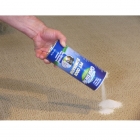
If you want to try and eliminate that doggy odor, Clear The Air can do it for you! Our Odor Eliminators can eliminate doggy odor from pretty much any source, big or small, seen or unseen.
If you want to eliminate doggy odor from your home, here is how:
If you have doggy odor in your carpet: Simply sprinkle Earth Care Clear The Air granules on the carpet and hang Earth Care Odor Remover Bags to eliminate doggy odors from the carpet. Wait for 24 hours to vacuum up the granules from the carpet.
If you have doggy odor in your dog beds: Take the dog beds outside where there is plenty of air circulation and sprinkle our Earth Care Clear The Air granules all over the beds. Allow 24 hours for the granules to stay on the dog beds. You can then shake off the granules and your odor will be eliminated. If the odor is extremely strong, you may want to wash the bed first, let it dry then apply the granules to the bed.
If you have doggy odor in your car: If your car smells like your dog’s bed, it’s time to use our product! Simply hang or place two of our Earth Care Odor Remover Bags in your car. Our product works best when there is air flow in your vehicle. We recommend rolling down the windows when your car is parked and not in use. If the odor is extremely strong, sprinkle some of our Earth Care Clear The Air granules on the floor boards of your vehicle. Leave the granules for 24 hours then you may vacuum them up.
This unique form of Earth Care Products Mineral does not have to come into contact with the odor producer; it will pull the odors from the entire area.
Have questions about eliminating a pesky odor? Please comment on our blog or contact our customer service agent, Pat.
-
How To Keep Pests Out Of Your Home
Posted on May 7th, 2014No one likes pests in their home.
Unfortunately sometimes when we get rid of pests, such as mice and rodents, their odor can linger.
Clear The Air Odor Eliminators will eliminate those odors easily and safely. Earth Care Bags do not have to come into contact with dead rodent or odor causing agent. Simply hang the bag near the odor and in 24 hours the odor will be gone. Earth Care acts like a magnet by attracting and neutralizing smells. It is made from an all natural mineral, is non toxic and biodegradable and safe for Planet Earth. It is also safe around children and pets, even if eaten. Earth Care adsorbs odors rather than masking them with a fragrance.
Check out our tips to keep pests out of your home:
Rodents and raccoons:
- Raw bacon or peanut butter makes good bait for a mousetrap. Make sure a mouse will have to tug the trap to remove the bait. If you’re using peanut butter, dab some on the triggering device and let it harden before setting the trap. If bacon is your bait, tie it around the triggering device.
- If a raccoon sets up housekeeping in your attic or chimney, chemical repellants such as oil of mustard, are temporarily effective. (The smell may bother you as much as it does the raccoon.) Your best bet is to let the animal leave, and then cover its entrance hole with wire mesh so that it cannot return.
- To keep rodents out of your house, seal every opening they could squeeze through. Some need less than 1/4 inch of space. Put poison in deep cracks or holes, and stuff them with steel wool or scouring pads pushed in with a screwdriver. Close the spaces with spackling compound mixed with steel wool fragments.
Insects:
- If your home becomes infested with fleas, vacuum rugs thoroughly before spraying, and throw the dust bag out at once.
- Keep ants away from your home with a concoction of borax and sugar. Mix 1 cup sugar and 1 cup borax in a quart jar. Punch holes in the jar’s lid, and sprinkle the mixture outdoors around the foundation of your home and around the baseboards inside your house. The ants are attracted by the sugar and poisoned by the borax.
- If you have cockroaches, sprinkle borax powder in the kitchen and bathroom cabinets. Avoid sprinkling where children and pets could be affected.
-
Why Does My Dog Bark So Much?
Posted on May 5th, 2014Dog barking can turn into a problem if it continues incessantly.
Clear The Air would like to share some information from the Animals Friends of the Valleys about the various reasons your dog barks and what you can do to stop incessant barking.
The first thing you need to do in order to quiet a chronic barker is to figure out why he’s barking in the first place. Is he lonely or bored? Do you spend enough time with him? Remember that dogs are pack animals and prefer the company of other animals and/or humans.
Most dogs will not be happy sitting by themselves in the backyard with nothing to do (except bark!) Make sure your dog has plenty of toys to occupy his mind and his need to chew. And make sure you spend quality time with him. Take him for walks and bring him inside the house every day for some “family” time. Dogs really love being with their people!
If your dog barks at night, bring him inside the house or garage. Most dogs prefer sleeping inside anyway (remember, dogs are not solitary creatures by nature.) Relocating your dog away from immediate neighbors to another area of your yard might eliminate barking. Another good solution is to adopt another animal so your dog will have a companion.
Bark collars are a wonderful tool in training your dog not to bark. They can be purchased at pet stores or can be ordered online for a lower price. These new age collars do not hurt your dog in any way, they simply reprimand the bark. This may startle your dog at first but after a few times they associate the reprimand with the bark and learn to do their everyday activities without barking.
In extreme cases, you might consider having your dog “de-barked.” De-barking is a procedure in which the vocal cords are surgically removed. In most cases, the dog will come home the day of the procedure. The barking sound will still be audible but will be more like a whisper. Consult your veterinarian for more information about de-barking.
Barking is the number one cause of neighbor disputes. Remember, it is unlawful to allow your dog to become a public nuisance. Chronic barking is a serious problem but there are many possible solutions. Investing some time, money, and energy to solving the problem will be well worth the effort, for you and your dog
For more information visit Animal Friends of the Valleys website.