


-
Crazy Facts About Dogs
Posted on March 20th, 2013Great Dog Facts!
Check out some of these dogs facts we have compiled together. Do you have some crazy dog facts? Share them with us by commenting on our blog!
- Boxers were named after their habit of playing. At the beginning of play with another dog, a Boxer will stand on his hind legs and ‘box’ at his opponent.
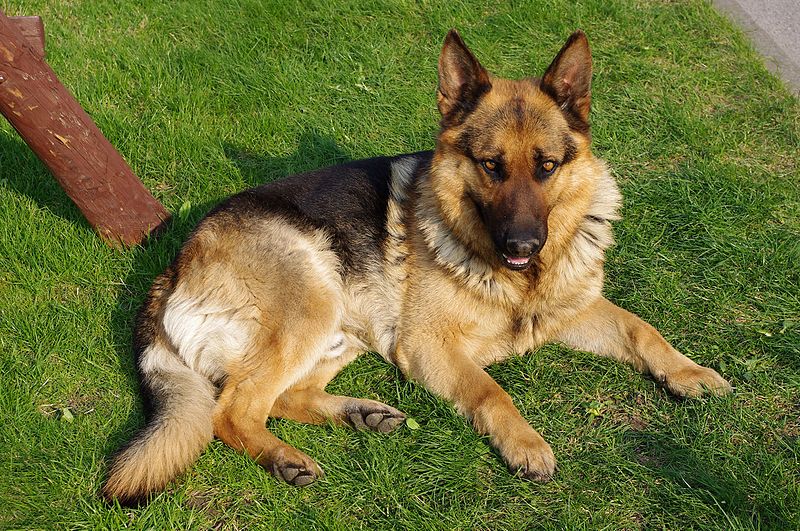
- The first guide dogs for the blind and visually impaired were trained in Germany to provide assistance for those blinded in the war. German Shepherds were used for their protective and strong sense of loyalty to their owner.
- Humans can detect sounds at 20,000 times per second, while dogs can sense frequencies of 30,000 times per second.
- Dogs sweat through the pads of their feet.
- A dog’s nose has over 200 scent receiving cells.
- 21% of dogs and 7% of cats snore.
- Newfoundland’s are such great swimmers because of their webbed feet. Basset Hounds cannot swim at all.
- All dogs are the descendant of the wolf that lived in eastern Asia about 15,000 years ago.
- Dogs are natural pack animals and they are naturally submissive to any dog with a higher pack status – human or canine.
- 33 percent of dog owners admit that they talk to their dogs on the phone or leave them messages on an answering machine.
- A frightened dog will put its tail between his legs because it cuts off the sent glands in its anal region which a very vulnerable part of the anatomy. Since the anal glands carry personal scents that identify the individual dogs, the tail between the legs action is the dog’s equivalent of insecure humans hiding their faces.
- A dog’s nose print is as unique as a human’s finger print and can be used to accurately identify them.
- Soulmates: More than half of us say we share characteristics with our dogs!
- During the Vietnam war 4500 working dogs were sent to aid the troops.
- The world’s smartest dogs are thought to be the Border Collie, the Poodle, and the Golden Retriever.
- A dog’s smell is more than 100,000 times stronger than that of a humans.
- Rin Tin Tin was the first Hollywood dog star… and he really signed his movie contracts, all 22 of them with a paw print!
- A one year old dog is as mature, physically, as a 15 year old human.
- Three dogs survived the sinking of the Titanic – a Newfoundland, a Pomeranian, and a Pekingese.
-
How To Potty Train Your Dog
Posted on March 13th, 2013Potty training tips for your dog.
Do you have a new puppy learning how to potty train? Clear the Air works great for eliminating odors from your dog’s accidents in the house. Plus, it is non-toxic and completely safe even if ingested.
Click Here to learn more about eliminating dog urine and feces odors.
Check out some helpful potty training tips for your dog:
- Restrict your dog’s access to the house. Making his environment smaller makes him less apt to have an accident. This same process can also be used for crate training.
- Keep your dog with you, or keep an eye on him. Dogs usually like to sneak off to have accidents, if you can’t see him, he might be getting into something he shouldn’t be.
- Go outside with him when teaching your dog to potty train. If you don’t see him urinating and defecating outside he might just be playing and not taking care of business. Plus going out with him teaches you about his routine.
- Quietly praise your dog for going potty outside. Don’t reprimand him for making a mistake, just distract him and get him outside as soon as you can.
- If you have a dog that likes one particular area specifically, you can put his food near that area and he will not urinate or defecate where he eats. But be careful, this sometimes doesn’t address the problem and the dog finds a new spot.
- Utilize a crate, or a baby gate, or an exercise pen when you are not home. If you are diligent about keeping your dog with you when you are home, but he pees or poops as soon as you leave it is defeating your hard work. Crates are a wonderful tool for potty training.
- Do not use puppy pads or indoor aids when potty training if you want your dog to potty outside. Encouraging potty indoor sometimes, but then wanting them to go outside is confusing. Choose one or the other and stick with it.
Be consistent and use lots of praise while controlling his environment and soon your dog will be happily going potty outside. Do you have potty training tips you’d like to share? Please comment on our blog.
-
The Life Of A Dog vs. A Cat
Posted on March 6th, 2013The difference between dogs and cats.
Clear the Air always likes sharing funny and light stories about animals. We thought this was especially cute about the difference between cats and dogs. Check it out:
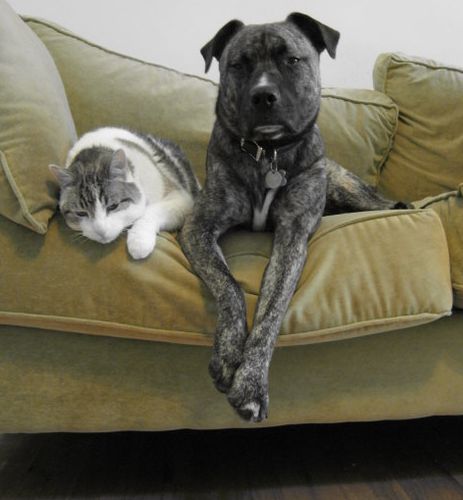
Excerpts from a Dog‘s Diary:
8:00 am – Dog food! My favorite thing!
9:30 am – A car ride! My favorite thing!
9:40 am – A walk in the park! My favorite thing!
10:30 am – Got rubbed and petted! My favorite thing!
2:00 pm – Lunch! My favorite thing!
1:00 pm – Played in the yard! My favorite thing!
3:00 pm – Wagged my tail! My favorite thing!
5:00 pm – Milk bones! My favorite thing!
7:00 pm – Got to play ball! My favorite thing!
8:00 pm – Wow! Watched TV with the people! My favorite thing!
11:00 pm – Sleeping on the bed! My favorite thing!Excerpts from a Cat‘s Diary:
Day 983 of my captivity. My captors continue to taunt me with bizarre little dangling objects. They dine lavishly on fresh meat, while the other inmates and I are fed hash or some sort of dry nuggets. Although I make my contempt for the rations perfectly clear, I nevertheless must eat something in order to keep up my strength. The only thing that keeps me going is my dream of escape. In an attempt to disgust them, I once again vomit on the carpet.
Today I decapitated a mouse and dropped its headless body at their feet. I had hoped this would strike fear into their hearts, since it clearly demonstrates what I am capable of. However, they merely made condescending comments about what a “good little hunter” I am.
There was some sort of assembly of their accomplices tonight. I was placed in solitary confinement for the duration of the event. However, I could hear the noises and smell the food. I overheard that my confinement was due to the power of “allergies.” I must learn what this means, and how to use it to my advantage.
Today I was almost successful in an attempt to assassinate one of my tormentors by weaving around his feet as he was walking. I must try this again tomorrow — but at the top of the stairs. I am convinced that the other prisoners here are flunkies and snitches. The dog receives special privileges. He is regularly released – and seems to be more than willing to return. He is obviously retarded. The bird has got to be an informant. I observe him communicate with the guards regularly. I am certain that he reports my every move. My captors have arranged protective custody for him in an elevated cell, so he is safe. For now. -
Helpful Dog Walking Tips
Posted on March 5th, 2013Dog walking tips for you and your dog.
It is important to give your dog the exercise he needs to stay healthy and in shape. Check out some helpful dog walking tips from Clear the Air.
If you have a dog, you will probably have key words or actions you do before you take a walk that your dog picks up on. Whether he knows the word “walk” or knows what shoes you put on, your dog has already shown his excitement to get out.
First, it is important to keep you dog on a leash. If he is always pulling on the leash, consider using a different collar which will increase your control and comfort. Visit us and talk to our experts to find out what is the best type of collar for your dog.
If you have a smaller dog, you can use a retractable leash and is the best way to give your dog a little extra slack while you walk.
Make sure you pick up after your pup. You can purchase poop bags, or just bring along a grocery bag. Place the bag over your hand, pick up what you have to, turn the bag inside out and tie the end closed.
Make sure that if you are taking your dog on a walk somewhere new, dogs are allowed at your destination. Some parks and beaches do not allow dogs.
Carry enough water for both you and your pet. You can pick up a foldable water dish and carry it with you.
If you are getting winded and tired, chances are your dog may be too. Find a shady place to rest. Dogs keep cool by panting, finding shady areas, walking in water and drinking water. If you are near a stream or lake, find a safe place to let your dog swim. This is an excellent way for your dog to get some exercise as well.
Don’t forget to put your dog’s tags on. If your dog happens to get lost while you are on your walk, he should have a tag with his name, your name and phone number on it. Of course you should always have your dog micro chipped. If your dog’s collar slips off with the tags on it, should someone find him and turn him in to the local shelter, he can be identified and reunited with you!
Train your dog for long hikes and runs. If your dog hasn’t exercised in quite a while, deciding to take him on a 7 mile hike might be a little too much for him. Work him up to the longer more strenuous outings by doing shorter distances with him first.
Do you have some tips you’d like to share with us? Please comment on our blog!
-
Does Your Couch Smell?
Posted on February 27th, 2013Who loves a nice comfy couch to sprawl out on and enjoy a relaxing nap or good movie? A couch is one of the most used pieces of furniture in your home and if your couch has an odor in it, it can make relaxation on the couch a bit distracting.
If your dog or cat has had an accident on the couch or you have spilled food on the couch, Clear the Air can eliminate those odors. Clear the Air does this without using any harsh chemicals or fragrances and is completely non-toxic and safe to even ingest!
This unique form of Earth Care Products Mineral can be sprinkled on carpet and furniture as needed to eliminate odors. Odors will be completely eliminated. Clear the Air does not have to come into contact with the odor producer; it will pull the odors from the entire area. It works well for old soaked in urine odors. For example, if the urine has soaked into the couch cushions, Clear the Air will literally pull the odor out from the cushions without even having to take apart your couch!
Clear The Air draws in odors like a powerful magnet. The odors are absorbed, and neutralized without any fragrances. It does not cover up odors; it literally pulls the odors from carpets and furniture leaving the air fresh and clean.
Clear The Air is made from an all natural mineral, is non toxic and biodegradable and safe for Planet Earth. It is also safe around children and pets even if eaten. Does your couch have a lingering odor you’d like to get rid of? Please call us or click here to order!
-
Spring Cleaning Tips
Posted on February 22nd, 2013Now is the time for Spring Cleaning! Set a day aside to get your house looking it’s best for the warmer months with the following tips:
- Organize your closet: This is the first step to organizing the rest of your home. Clear out unused clothing and accessories and organize by how you get dressed in the morning. It is also useful to organize your clothes by color and style.
- Eliminate odors: First blot up as much of the mess as you can. Use a stain remover to get rid of any stains. You can then sprinkle Clear The Air Carpet and Furniture Odor Eliminator on the soiled area. Leave on for 24 hours then vacuum up. If odor still lingers a bit, use a second application.
- Shine up your stainless steel: Use a light mist of wax-based aerosol spray once or twice a week. Don’t use too much, you don’t want to soak the surface and make it greasy. Wipe the mist with a clean, lint-free cloth. Don’t use anything abrasive such as Soft Scrub or Scotch Brite pads. This will scratch and ruin the surface.
- Remove oils and marks from walls in your home: Start with a clean cloth or sponge and water. You can add a little dishwashing liquid into the water if you have stubborn wall marks. After cleaning, make sure to rinse the wall afterward with plain water.
- Give your interior a different look: Make a fast easy change with bedding, towels and table linens to create a different mood. You can also switch things out seasonally or whenever you want to play with a certain color or pattern.
- Clean your carpets: Always take your shoes off when you get home but leave your socks on because your bare feet leave natural oils which attract dirt. For high traffic areas, bring in a professional carpet cleaner 3-4 times a year.
- Reorganize your shelves: Sort your books on your bookshelf so they don’t look uniform. Remove any ripped dust jackets. Line your books horizontally and vertically in a pattern to relieve monotony or rows.
Do you have some spring cleaning tips? We’d love to hear them! Comment on our blog to tell us your spring cleaning suggestions.
-
How To Keep Your Pets From Getting Bored
Posted on February 13th, 2013With the colder winter months here, it is sometimes difficult to get your dog out for his normal exercise. Cats may not be keen on going outside when it’s raining or snowing either.
Clear the Air would like to share some helpful tips to keep your pets entertained and avoid bad behavior when it is difficult to get outside:
- Just like humans like to be entertained by technology, cats can too. Have you ever had your cat follow your mouse pointer on your computer screen? What about a laser toy for your cat to run around the house and chase? As crazy as it sounds, there are even apps you can download on your iPad just for cats!
- Use a clicker to train your dog indoors and teach him new tricks. In clicker training, a distinct and consistent signal marks a desired behavior of your pet in real time. Once you click, follow the signal with a motivating reward like a treat. Because your dog understands which action earned the click and reward, he will learn new behaviors quickly and enthusiastically.
- Cats love hunting and love to explore hidden things. How many times have you unpacked a package you received and watched your cat be entertained for hours with the box? I know our cats love new things like that! Try putting a couple treats in a paper cup and letting them bat the cup around until they find the treat.
- Both cats and dogs can perform agility training by navigating through obstacles such as a hoop or tunnel, especially if a treat is rewarded at the end of it. Set up different obstacles for your pets and put a treat at the end of it.
- Have your dog use his nose and search for a treat. Nose work is a variation of search and rescue and a popular way to keep your dog moving by tapping into their natural scenting abilities.
- Use items around the house to make a toy for your pets. Poke a hole in a plastic jug so food comes out of it when your pet rolls it around. Of course it is important to monitor your pet to make sure he doesn’t chew or ingest any bits of the homemade toy.
- Get a toy designed to keep your dog busy. Stop by your local pet store and ask them what they suggest to give to your dog to keep him entertained. If you have to leave for a while, give him a toy that will keep him busy while you’re gone. One of the ones we like to use on our dogs is the Kong. You can easily refill it with peanut butter or anything else your pet likes.
- Associate your dog with other dogs at indoor dog parks. There are many doggy day cares which offer socialization with other pups.
-
How To Care For Your Dog In Cold Weather
Posted on February 12th, 2013We are experiencing harsh weather around the nation and while we take precautions to make sure we stay warm, it is important to make sure your dog is warm enough during harsh weather conditions as well.
Clear the Air is here to provide some tips on caring for your dog in the cold weather this winter is bringing:
Dog Jackets and Sweaters: Dogs with heavy coats, such as Huskies, can withstand cold weather even on long walks. However, dogs with shorter hair and smaller dogs have trouble retaining heat, especially in wet and windy weather. Dogs that are skinny, sick, old and very young need to have an extra layer put on when they go outside. Just think about your bones and joints: if you experience stiffer and achy joints when it’s cold, your dog probably does too.
Ice Melters: Ice melters and rock salt will burn your dog’s feet. When you go for walks, make sure your dog stays away from visible ice melters and get it off his feet as soon as you can if he steps in it. If he does walk in it, have him walk in the snow and wipe it off with fresh snow. Don’t let him lick the ice melter. You might want to consider putting booties on your dog’s feet to protect them.
Antifreeze is Dangerous: Many know that antifreeze is extremely dangerous for your dog (or cat) to ingest and can cause death. Just 6 tablespoons of it is enough to kill a 45 pound dog. If you think your dog may have licked up any antifreeze at all, take him to the vet immediately.
Space Heaters: Make sure to turn off AND unplug your space heaters in your home. Not only can your dog burn himself from the space heater but an unattended space heater can also burn your home down. No matter what, turn off and unplug your space heater.
Cold Weather: If you wouldn’t leave your dog in the car during the heat of the summer, why would you leave your dog in the car in the middle of winter? On the same note, don’t leave a dog tied up outside a store in the cold weather. If you wouldn’t want to be stuck in the cold, don’t do it to your dog.
Thin Ice: Be careful about letting your dog roam around near ice covered water. That being said, if there is a blizzard with limited visibility do not let your dog off his leash. Dogs get lost in whiteouts and if he wanders the wrong direction, he could break thin ice and fall into freezing cold water.
Bottom line: keep your dog indoors with you during the winter. Just as you would enjoy curling up by the fire, so would he!
-
Remove Urine Odor From Carpets and Other Flooring
Posted on January 22nd, 2013Do you have a dog or cat who has urinated in your home? We guarantee 100% the odor will be eliminated with Clear the Air’s Carpet/Furniture Odor Eliminator.
Cat & dog urine odor is one of the strongest and toughest odors to get rid of. Most products on the market are wet and must come into contact with the urine to remove the odor.

This means if you have urine that has soaked into the carpet you must pull up the carpet and pad and soak the carpet, pad and floorboards. What a mess!
With Clear The Air Cat & Dog Urine Odor Eliminator just sprinkle the granules on top of the carpet leave on overnight and vacuum in the morning and the odor is completely eliminated. Works well on all surfaces pulling the odors out of tile and concrete. Will completely eliminate the odors from your litter box, no one will know you have a litter box in the house!
Clear the Air does not have to come into contact with the odor producer; it will pull the odors from the carpet pad, and sub-floor. Clear The Air draws in odors like a powerful magnet. The odors are adsorbed, and neutralized without any fragrances. Clear The Air does not cover up odors; it literally “clears the air” leaving the air fresh and clean. Clear The Air is made from an all-natural mineral, is non-toxic and biodegradable and safe for Planet Earth.
It is also safe around children and pets even if eaten.
Eliminate Cat Urine Odors From Carpets, Wood Floors, Tile, Concrete or Furniture:
- Remove feces and excess urine.
- Sprinkle granules over area until dry granules are present on top. Also works well on old dry urine odors.
- Leave overnight, then sweep or vacuum.
- Clear The Air pulls odors from carpet, padding, and subfloor.
- Typically one application will eliminate all odors; occasionally a second application is necessary.
- One canister covers 100 square feet.
-
Tips To House Train Your Puppy
Posted on January 9th, 2013How to House Train Your Puppy. The following is an article from the ASPCA about house training your puppy.
If you have accidents in your home from your puppy, please remember to use Clear the Air’s Carpet and Furniture Odor Eliminator. We guarantee it will work 100%.
House training is accomplished by rewarding your puppy for eliminating where you want him to go (outside) AND by preventing him from urinating or defecating in unacceptable places (inside the house). You should keep crating and confinement to a minimum, but some amount of restriction is usually necessary for your puppy to learn to “hold it.”
How Long It Will Take – Some puppies learn where and where not to eliminate at a very young age, while others take longer to understand. Most puppies can be reasonably housetrained by four to six months of age. However, some puppies are not 100% reliable until they are eight to twelve months of age. Some puppies seem to catch on early but then regress. This is normal. Keep in mind that it may take a while for your puppy to develop bowel and bladder control. He may be mentally capable of learning to eliminate outdoors instead of inside, but he may not yet be physically capable of controlling his body.
How Often Your Puppy Needs to Go Out – All puppies are different, but a puppy can usually only hold his waste for the same number of hours as his age in months. (In other words, a four-month-old pup should not be left alone for more than four consecutive hours without an opportunity to go outside.) He can last longer at night, however, since he’s inactive (just like we can). By the time your pup is about four months old, he should be able to make it through the night without going outside.
House Training Steps
1. Keep your puppy on a consistent daily feeding schedule and remove food between meals.
2. Take the puppy outside on a consistent schedule. Puppies should be taken out every hour, as well as shortly after meals, play and naps. All puppies should go out first thing in the morning, last thing at night and before being confined or left alone.
3. In between these outings, know where your puppy is at all times. You need to watch for early signs that he needs to eliminate so that you can anticipate and prevent accidents from happening. These signs include pacing, whining, circling, sniffing or leaving the room. If you see any of these, take your puppy outside as quickly as possible. Not all puppies learn to let their caretakers know that they need to go outside by barking or scratching at the door. Some will pace a bit and then just eliminate inside. So watch your puppy carefully.
4. If you can’t watch your puppy, he must be confined to a crate or a small room with the door closed or blocked with a baby gate. Alternatively, you can tether him to you by a leash that does not give him much leeway around you (about a six-foot leash). Gradually, over days or weeks, give your puppy more freedom, starting with freedom a small area, like the kitchen, and gradually increasing it to larger areas, or multiple rooms, in your home. If he eliminates outside, give him some free time in the house (about 15 to 20 minutes to start), and then put him back in his crate or small room. If all goes well, gradually increase the amount of time he can spend out of confinement.
5. Accompany your puppy outside and reward him whenever he eliminates outdoors with praise, treats, play or a walk. It’s best to take your puppy to the same place each time because the smells often prompt puppies to eliminate. Some puppies will eliminate early on in a walk. Others need to move about and play for a bit first.
6. If you catch your puppy in the act of eliminating inside, clap sharply twice, just enough to startle but not scare him. (If your puppy seems upset or scared by your clapping, clap a little softer the next time you catch him in the act.) When startled, the puppy should stop in mid-stream. Immediately run with him outside, encouraging him to come with you the whole way. (If necessary, take your puppy gently by the collar to run him outside.) Allow your pup to finish eliminating outside, and then reward him with happy praise and a small treat. If he has nothing to eliminate when he gets outside, don’t worry. Just try to be more watchful of him in the house in the future. If your puppy has an accident but you don’t catch him in the act and only find the accident afterward, do nothing to your pup. He cannot connect any punishment with something he did hours or even minutes ago.
Additional House Training Tips
- Clean accidents with an enzymatic cleanser to minimize odors that might attract the puppy back to the same spot.
- Once your puppy is house trained in your home, he may still have accidents when visiting others’ homes. That’s because puppies need to generalize their learning to new environments. Just because they seem to know something in one place does NOT mean that they’ll automatically know that thing everywhere. You’ll need to watch your puppy carefully when you visit new places together and be sure to take him out often.
- Likewise, if something in your puppy’s environment changes, he may have a lapse in house training. For example, a puppy might seem completely house trained until you bring home a large potted tree—which may look to him like a perfect place to lift his leg!
House training does require an investment of time and effort—but it can be done! If you’re consistent, your hard work will pay off. Hang in there! If you need help, don’t hesitate to contact a qualified professional, such as a Certified Professional Dog Trainer (CPDT), a Certified Applied Animal Behaviorist (CAAB or Associate CAAB) or a board-certified veterinary behaviorist (Dip ACVB).
What NOT to Do:
- Do not rub your puppy’s nose in his waste.
- Do not scold your dog for eliminating indoors. Instead, if you catch him in the act, make a noise to startle him and stop him from urinating or defecating. Then immediately show your dog where you want him to go by running with him outside, waiting until he goes, and then praising and rewarding him.
- Do not physically punish your puppy for accidents (hitting with newspaper, spanking, etc.). Realize that if your puppy has accidents in the house, you failed to adequately supervise him, you did not take him outside frequently enough, or you ignored or were unaware of his signals that he needed to go outside.
- Do not confine your puppy to a small area for hours each day, without doing anything else to correct the problem.
- Do not crate your puppy if he’s soiling in the crate.
- If your puppy enjoys being outside, don’t bring him inside right after he eliminates or he may learn to “hold it” so that he can stay outside longer.
- Do not clean with an ammonia-based cleanser. Urine contains ammonia. Cleaning with ammonia could attract your puppy back to the same spot to urinate again. Instead, use an enzymatic cleaner. You can find one at some grocery stores or any major pet store.