


-
How To Get Rid Of Odors In Your Refrigerator
Posted on January 25th, 2013Do you open up your fridge and immediately your whole kitchen smells because the leftovers are a few days too old? Don’t let refrigerator odors get you down – use Clear the Air Odor Eliminator Bags.
All you have to do is simply place the Odor Eliminator Bag in your refrigerator and foul odors will be eliminated. The bags last up to 3 months.
These bags are perfect for refrigerators in your RV or boat, should the power get turned off and food spoil in the fridge. Bags are easy to use and last an average of 3-4 months in use and contain no chemicals, toxins or fragrances. Simply place the bag near the odor and in 24 hours the odor will be gone.
Earth Care does not mask odors it removes them. Its contents are bio-degradable, non-flammable, non-toxic, safe around children, pets, & mother earth.
Do you have questions about our product? Please contact our customer service representative, Pat, and she will help answer all your questions.
-
How To Keep Your Cat From Scratching Your Furniture
Posted on January 24th, 2013A cat’s natural instinct is to scratch his nails. If your furniture in your home is being destructed, read the following tips on how to show your cat where it is appropriate to scratch.
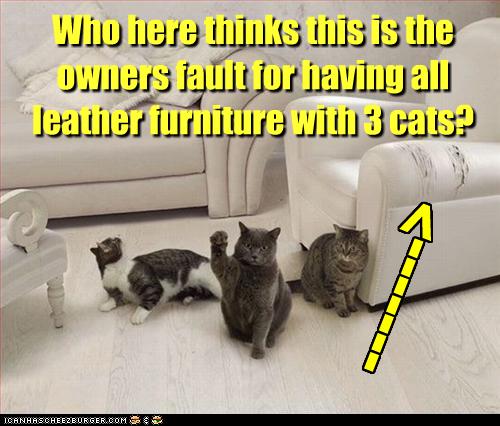
First, it is important to know why your cat scratches and why it is important to provide the ability for your cat to sharpen his nails. The reasons why a cat scratches his nails are:
- It conditions the claws by removing the dead outer layer or sheath.
- It is a way of marking territory by leaving both a visual mark and an odor or scent (cats have scent glands on their paws).
- It is a way of stretching the entire body and flexing the feet and claws.
- It is used during play.
- It may be that cats communicate dominance by scratching in front of other cats.
In order to convince your cat he shouldn’t scratch your furniture, follow these steps:
- Try giving your cat posts made of cardboard, carpeting, wood, sisal and upholstery – all different qualities and surfaces. Some cats prefer horizontal posts. Others like vertical posts or slanted posts. Some prefer a vertical grain for raking, while others favor a horizontal grain for picking. Once you figure out your cat’s preference for scratching, provide additional posts of that kind in various locations.
- Encourage your cat to investigate her posts by scenting them with catnip, hanging toys on them and placing them in areas where she’ll be inclined to climb on them.
- Discourage inappropriate scratching by removing or covering other desirable objects. Turn speakers toward the wall. Put plastic, double-sided sticky tape, sandpaper or upside-down vinyl carpet runner (knobby parts up) on furniture or on the floor where your cat would stand to scratch your furniture. Place scratching posts next to these objects, as “legal” alternatives.
- Clip your cat’s nails regularly.
- Consider putting plastic caps on your cat’s claws so that he’ll do no damage if he scratches on something in your home. These special caps attach to claws with an adhesive. They’re temporary, lasting four to six weeks.
- If you catch your cat in the act of scratching an inappropriate object, you can try startling him by clapping your hands or squirting him with water. Use this procedure only as a last resort, because your cat may associate you with the startling event (clapping or squirting) and learn to fear you.
-
Remove Urine Odor From Carpets and Other Flooring
Posted on January 22nd, 2013Do you have a dog or cat who has urinated in your home? We guarantee 100% the odor will be eliminated with Clear the Air’s Carpet/Furniture Odor Eliminator.
Cat & dog urine odor is one of the strongest and toughest odors to get rid of. Most products on the market are wet and must come into contact with the urine to remove the odor.

This means if you have urine that has soaked into the carpet you must pull up the carpet and pad and soak the carpet, pad and floorboards. What a mess!
With Clear The Air Cat & Dog Urine Odor Eliminator just sprinkle the granules on top of the carpet leave on overnight and vacuum in the morning and the odor is completely eliminated. Works well on all surfaces pulling the odors out of tile and concrete. Will completely eliminate the odors from your litter box, no one will know you have a litter box in the house!
Clear the Air does not have to come into contact with the odor producer; it will pull the odors from the carpet pad, and sub-floor. Clear The Air draws in odors like a powerful magnet. The odors are adsorbed, and neutralized without any fragrances. Clear The Air does not cover up odors; it literally “clears the air” leaving the air fresh and clean. Clear The Air is made from an all-natural mineral, is non-toxic and biodegradable and safe for Planet Earth.
It is also safe around children and pets even if eaten.
Eliminate Cat Urine Odors From Carpets, Wood Floors, Tile, Concrete or Furniture:
- Remove feces and excess urine.
- Sprinkle granules over area until dry granules are present on top. Also works well on old dry urine odors.
- Leave overnight, then sweep or vacuum.
- Clear The Air pulls odors from carpet, padding, and subfloor.
- Typically one application will eliminate all odors; occasionally a second application is necessary.
- One canister covers 100 square feet.
-
Get Rid Of Cigarette Odor From Anywhere
Posted on January 18th, 2013If you have bought or rented a new home and the previous dweller was a smoker, you are probably fed up with trying to get that sultry cigarette odor out of the house.
Did you know Clear the Air will removed cigarette odor from ANYWHERE? Cars, homes, carpets, rugs, clothes, offices and anywhere else cigarette odor has crept in to.
Unfortunately, cigarette odor has a way of creeping into the walls making it almost impossible to remove the odor completely. Earth Care’s Clear The Air Odor Eliminator will pull these odors out of your house, 100% guaranteed! Our product doesn’t even need to come in contact with the odor and it will remove the odors out of carpets, drapes, furniture, clothing and bedding.
Clear the Air is simple to use and is an inexpensive solution to odor elimination. Here are the directions to removing cigarette smoke odor out of your home:
Hang 1-2 Earth Care Odor Eliminator Bags in each room that smells like cigarette smoke. One bag will cover 50-100 square feet. Odor will be eliminated in 24 hours.
A Bag will last 1-2 months, if room is heavily permeated with smoke odor the bag may need to be changed more often at first.
If odors are particularly strong or room has been smoked in for years sprinkle Clear The Air Odor Eliminator for Carpet and Furniture granules on carpets and furniture. Leave down 24 hours and vacuum. Odors will be completely eliminated.
One canister of Clear The Air Odor Eliminator for Carpet and Furniture covers 100 square feet; one bucket covers 900 square feet.
Granules can also be placed in ashtrays and cigarette butt receptacles.
Of course, if you have any questions on removing cigarette smoke odor, please do not hesitate to call our helpful Customer Service Agent, Pat, at (800) 611-1611 or (760) 941-5302 or via email: pmolina@cleartheair.com
-
Keep Rodents Out Of Your RV
Posted on January 17th, 2013While your RV is in storage this winter, you will want to keep unwanted animals out of your camper. We have some helpful tips from Ehow.com about deterring rodents from your RV.
Remember, if you have the unfortunate experience of opening your RV to find rodents have made their home in your RV for the last few months, eliminate the odor with our collection of Odor Eliminator Products.
Mice and other rodents frequently enter campers and cause damage to the interior. Mice enter through small holes in the exterior of the camper; these holes are usually located on the underside of the structure. Pest control precautions are especially necessary before storing your camper for the season.
What you’ll need to deter rodents from your RV – A can of expandable foam, glue traps and ultrasonic rodent deterrent.
- First you will want to search the exterior of the camper for any holes.
- If you find any, point the can of expandable foam at the holes. Depress the can’s nozzle, and fill the holes with expandable foam. Repeat this process around all unwanted openings.
- Next you will want to place mousetraps around the outside of the camper. This will hinder the mice from entering your camper.
- You might want to also install an ultrasonic rodent-control-device. These devices emit sounds that deter mice from entering the camper.
- Lastly, spread mothballs around the inside of the camper. Please note, if you place mothballs inside the camper AND place your Odor Eliminator Bags in the camper, the bags will work to eliminate the moth ball odor, thus less efficiently removing any dead rodent odors. Our suggestion is to take the moth balls out of your RV should you already have odors from rodents, then place the Odor Eliminator Bags in the camper.
Have questions about odors in your RV? Please contact our customer service (located in the USA) and we’d be happy to help answer any questions you may have.
-
We’re A Green Product
Posted on January 15th, 2013Everyone wants to use green products nowadays. Not only is Clear the Air green, but it is so safe you can eat it! Our product can be used anywhere in the house to eliminate foul odors and doesn’t even have to come in contact with the odor producer.
For example, if you have a rat that died in the walls of your house, simply hang a bag or two where the odor is strongest and the odor will be eliminated. It’s really as simple as that.
Earth Care is made from an all natural mineral. It is non toxic, non hazardous, non-caustic, and biodegradable. It can safely be used around pets and children. It is safe to sprinkle in your pet’s cage; it will not hurt your pet even if eaten. It can be applied directly to you pets fur; this is excellent if your pet has encountered a skunk, or to get rid of the “doggie” smell.
Many of the odor and pollution control products on the market today act merely as masking agents. This means they add chemicals to the air to cover up odors and actually increase the level of indoor pollutants in the process. Earth Care, on the other hand, truly eliminates odors and cleans the air by adsorbing and neutralizing odors. Earth Care Products are especially beneficial to those that suffer from chemical sensitivity which can be aggravated by fragrances.
Earth Care is safe for Planet Earth. To dispose of Earth Care simply add to your soil, it is an excellent nitrogen soil amendment.
Where have you used our product? We’d love to hear from you. Please leave a comment at our blog!
-
Tips for Storing Your Motorhome or RV
Posted on January 11th, 2013Did you know Clear the Air Odor Eliminator Bags are the magic touch for removing foul odors from your RV?
No matter what the odor may be, make sure to stock up on our Odor Eliminator Bags and place them in strategic areas of your RV such as the restroom, refrigerator and living room.
Clear the Air would like to share some tips for storing your RV for the winter. Follow these steps to prepare for storage:
- Wash and wax your vehicle to prevent dust or dirt buildup.
- Disconnect the battery. If the RV is stored in a harsh climate take the battery out and store it in a more moderate, climate-controlled area.
- Use pads to park your rig with the tires off the ground to prevent soft spots.
- Turn off pilot lights and turn off the propane at the source.
- Drain all water from your rig including hot and fresh water tanks, and all hot and cold lines.
- Turn the refrigerator off, defrost and wipe it dry. Leave the door propped open a little bit so air can circulate. Place an Odor Eliminator Bag in the refrigerator.
- Seal all outside openings to prevent critters from taking up residence inside.
- Use a breathable cover to avoid condensation forming between the cover and RV, or park it inside a garage or facility. Consult an RV dealer on where to purchase a cover.
A few hours of preparation can save you a huge amount of hassle in the long run – and get you back on the road when the season changes and pleasant weather returns.
To maintain your RV or motorhome, follow these suggestions when the vehicle is being stored:
- Drive the motorhome once every 30 days for 30 minutes to 1 hour.
- Store the vehicle with full engine fluid levels.
- Keep the fuel tank full to prevent condensation. In addition, adding fuel stabilizer will also aid in preventing condensation.
- Keep the battery charge levels in top condition.
- If your motorhome is equipped with a generator, make sure proper procedures are followed to either exercise or store the generator. Refer to the manufacturer’s owner’s manual for complete exercise and/or storage instructions.
- Turn off the motorhome master battery switch.
- Place two to three Clear the Air Odor Eliminator Bags in the RV to eliminate musty/mildew odors.
- Wash and wax your vehicle to prevent dust or dirt buildup.
-
Tips To House Train Your Puppy
Posted on January 9th, 2013How to House Train Your Puppy. The following is an article from the ASPCA about house training your puppy.
If you have accidents in your home from your puppy, please remember to use Clear the Air’s Carpet and Furniture Odor Eliminator. We guarantee it will work 100%.
House training is accomplished by rewarding your puppy for eliminating where you want him to go (outside) AND by preventing him from urinating or defecating in unacceptable places (inside the house). You should keep crating and confinement to a minimum, but some amount of restriction is usually necessary for your puppy to learn to “hold it.”
How Long It Will Take – Some puppies learn where and where not to eliminate at a very young age, while others take longer to understand. Most puppies can be reasonably housetrained by four to six months of age. However, some puppies are not 100% reliable until they are eight to twelve months of age. Some puppies seem to catch on early but then regress. This is normal. Keep in mind that it may take a while for your puppy to develop bowel and bladder control. He may be mentally capable of learning to eliminate outdoors instead of inside, but he may not yet be physically capable of controlling his body.
How Often Your Puppy Needs to Go Out – All puppies are different, but a puppy can usually only hold his waste for the same number of hours as his age in months. (In other words, a four-month-old pup should not be left alone for more than four consecutive hours without an opportunity to go outside.) He can last longer at night, however, since he’s inactive (just like we can). By the time your pup is about four months old, he should be able to make it through the night without going outside.
House Training Steps
1. Keep your puppy on a consistent daily feeding schedule and remove food between meals.
2. Take the puppy outside on a consistent schedule. Puppies should be taken out every hour, as well as shortly after meals, play and naps. All puppies should go out first thing in the morning, last thing at night and before being confined or left alone.
3. In between these outings, know where your puppy is at all times. You need to watch for early signs that he needs to eliminate so that you can anticipate and prevent accidents from happening. These signs include pacing, whining, circling, sniffing or leaving the room. If you see any of these, take your puppy outside as quickly as possible. Not all puppies learn to let their caretakers know that they need to go outside by barking or scratching at the door. Some will pace a bit and then just eliminate inside. So watch your puppy carefully.
4. If you can’t watch your puppy, he must be confined to a crate or a small room with the door closed or blocked with a baby gate. Alternatively, you can tether him to you by a leash that does not give him much leeway around you (about a six-foot leash). Gradually, over days or weeks, give your puppy more freedom, starting with freedom a small area, like the kitchen, and gradually increasing it to larger areas, or multiple rooms, in your home. If he eliminates outside, give him some free time in the house (about 15 to 20 minutes to start), and then put him back in his crate or small room. If all goes well, gradually increase the amount of time he can spend out of confinement.
5. Accompany your puppy outside and reward him whenever he eliminates outdoors with praise, treats, play or a walk. It’s best to take your puppy to the same place each time because the smells often prompt puppies to eliminate. Some puppies will eliminate early on in a walk. Others need to move about and play for a bit first.
6. If you catch your puppy in the act of eliminating inside, clap sharply twice, just enough to startle but not scare him. (If your puppy seems upset or scared by your clapping, clap a little softer the next time you catch him in the act.) When startled, the puppy should stop in mid-stream. Immediately run with him outside, encouraging him to come with you the whole way. (If necessary, take your puppy gently by the collar to run him outside.) Allow your pup to finish eliminating outside, and then reward him with happy praise and a small treat. If he has nothing to eliminate when he gets outside, don’t worry. Just try to be more watchful of him in the house in the future. If your puppy has an accident but you don’t catch him in the act and only find the accident afterward, do nothing to your pup. He cannot connect any punishment with something he did hours or even minutes ago.
Additional House Training Tips
- Clean accidents with an enzymatic cleanser to minimize odors that might attract the puppy back to the same spot.
- Once your puppy is house trained in your home, he may still have accidents when visiting others’ homes. That’s because puppies need to generalize their learning to new environments. Just because they seem to know something in one place does NOT mean that they’ll automatically know that thing everywhere. You’ll need to watch your puppy carefully when you visit new places together and be sure to take him out often.
- Likewise, if something in your puppy’s environment changes, he may have a lapse in house training. For example, a puppy might seem completely house trained until you bring home a large potted tree—which may look to him like a perfect place to lift his leg!
House training does require an investment of time and effort—but it can be done! If you’re consistent, your hard work will pay off. Hang in there! If you need help, don’t hesitate to contact a qualified professional, such as a Certified Professional Dog Trainer (CPDT), a Certified Applied Animal Behaviorist (CAAB or Associate CAAB) or a board-certified veterinary behaviorist (Dip ACVB).
What NOT to Do:
- Do not rub your puppy’s nose in his waste.
- Do not scold your dog for eliminating indoors. Instead, if you catch him in the act, make a noise to startle him and stop him from urinating or defecating. Then immediately show your dog where you want him to go by running with him outside, waiting until he goes, and then praising and rewarding him.
- Do not physically punish your puppy for accidents (hitting with newspaper, spanking, etc.). Realize that if your puppy has accidents in the house, you failed to adequately supervise him, you did not take him outside frequently enough, or you ignored or were unaware of his signals that he needed to go outside.
- Do not confine your puppy to a small area for hours each day, without doing anything else to correct the problem.
- Do not crate your puppy if he’s soiling in the crate.
- If your puppy enjoys being outside, don’t bring him inside right after he eliminates or he may learn to “hold it” so that he can stay outside longer.
- Do not clean with an ammonia-based cleanser. Urine contains ammonia. Cleaning with ammonia could attract your puppy back to the same spot to urinate again. Instead, use an enzymatic cleaner. You can find one at some grocery stores or any major pet store.
-
Outside Cat vs. Indoor Cat
Posted on January 7th, 2013Many cat parents feel bad their cat can not experience life outdoors and out of guilt will start to let their cat out. Unfortunately awful things can happen to your cats when they go outside — they can be hit by cars, attacked by predators, infected with diseases or just disappear.
But many people still let their cats outdoors — often with misplaced good intentions. We would like to share Petfinder.com’s most common reasons people let their cats outside, along with safer, indoor alternatives.
Myth 1: Indoor cats get bored.
Fact: The truth is, indoor cats can and do get bored, but letting them outside is not a good solution.
Instead, make your home more interesting: Set up perches where he can watch birds from the safety of inside, build a DIY cat playhouse, hide his food or modify his feeder so he has to “hunt” for it. Finally, if your cat is amenable to it, you might consider adopting a second cat as a playmate.
Myth 2: Indoor cats are overweight.
Fact: If your cat is overweight, the safest way to help her trim down is by combining portion control and a daily exercise and play routine.
Stop free-feeding your cat, or at least be mindful only to feed a healthy amount per day. Yes, cats do overeat. You can consult your vet about how many calories your cat should be eating in a day.
Have a cat who won’t stand for an empty food dish? Keep him distracted with the activities mentioned above — the feeder toy would be perfect for him. If you feed wet food, try stuffing a smaller dog’s toy (like a Kong) with the food so your cat will have to work to get the food out.
Cats love a schedule. Try feeding him at the same times each day and he’ll get used to the routine quickly. Just remember to consult your veterinarian before starting any new feeding or weight-loss routines.
Myth 3: Indoor cats are destructive.
Fact: Destructive behavior is often a sign that something else is going on. Is your cat sick? Bored? A talk with your vet or a behaviorist may be in order.
Myth 4: My cat’s always been allowed outside, so he can’t be indoor-only.
Fact: Many cats have successfully gone from outdoor-only or indoor/outdoor to indoor-only. The key, again, is making sure the indoor environment is just as interesting as outside — and being vigilant about preventing escape attempts.
Myth 5: My cat is safe when he goes outside because he stays close to my home.
Fact: A study of 10 house cats and seven farm cats published in the European ecology journal Ecography found that on average, the house cats covered more ground than the farm cats — at night, the house cats moved within an average area of nearly 20 acres, compared to just over 6 acres for the farm cats.
A lot can happen even within a small radius of your home, so if you really want to let your cat outside, consider harness training him or creating a screened-in enclosure for him.
Myth 6: I need to let my cat out of the house because I’m allergic to her.
Fact: You may well be allergic to your cat, but it’s possible you’re really allergic to something she’s bringing in: Indoor/outdoor cats pick up fleas, ticks, pollen and other allergens from the environment.
If you really are allergic to your cat (an allergy test will tell you for sure), there are some easy ways you can reduce the allergens in your home — even when your cat is indoor-only. Find out more about living with cat allergies here.
To read entire article from Petfinder, click here.
-
New Year’s Eve Pet Safety
Posted on December 31st, 2012Keeping Your Pets Safe On New Year’s Eve
When you are welcoming in the New Year tonight, keep in mind your pets and other animals may not be so enthusiastic about the noise.
Pet’s ears tend to suffer from the noise made by firecrackers blasts, causing them to tremble, bark excessively, refuse to eat food, hide or run away and sometimes even lose bowel control. Besides the noise, fireworks also produce plumes of smoke that may harm animal’s respiratory systems.
Follow these helpful tips from PETA on how to keep pets and other animals safe during New Year festivities:
- Keep cats and dogs indoors in a room where they feel safe during fireworks displays and, if possible, stay with them.
- Act happy and calm around scared animals in order to reinforce the idea that they don’t have a reason to be afraid.
- Leave your animals at home during the celebrations – never take them with you to watch firecracker displays.
- Never leave animals tethered or chained outside.
- Close your windows and curtains. Turn on a radio that’s tuned to a classical music station, or turn on the TV to help drown out the sound of the fireworks.
- Watch for stray animals who may be distressed. If you see an animal injured by fireworks, call your local Humane Society.