


-
How To Sell Your Home Faster
Posted on June 17th, 2013Clear The Air’s line of products can be used for pretty much any odor you come across.
We have helped many home owners and realtors sell homes much faster by eliminating pesky pet and cigarette smoke odors in homes.
We would like to share some tips to selling your home faster. Remember to use Clear The Air’s line of products to clear out any odors lingering in your home.

- Empty out your closets when selling. You can never have too much storage. Take half your stuff out of your closets and neatly organize what is left. Buyers will snoop so make sure all your closets and cabinets are clean and tidy.
- Maximize lighting in your home when selling. Take down the drapes, wash the windows and change the lampshades all to create more light in your home. Making your home more bright and cheery will increases the chances of it selling.
- Find a great real estate agent when selling. Having an agent who knows what properties are going on the market and knows the comps in your neighborhood will be key to making sure your home gets sold fast.
- Keep your pets away while showing your home. Not everyone is an animal lover and they don’t want to walk in your home smelling the kitty litter box or seeing pet fur on everything. This gives buyers the impression your home is not clean. If planning an open house, make arrangements to keep your pets somewhere else. Make sure to use Clear The Air on your litter box!
- Make quick fixes before selling, not major upgrades. If you do a huge improvement project before your put your home on the market, you may not get your money back. Small things like new door handles and clean grout are good to do before listing your home.
- De-personalize your home when selling. The more personal stuff in your home the less likely a potential buyer can imagine themselves living there. You may want to hire a home stager to maximize the full potential of your home.
- Sell your kitchen. Fixing up your kitchen will help increase your value tremendously. Anything from new cabinet hardware to new counter tops will make your potential buyer’s eyes light up.
- Be available to show any time when selling. Make sure your home is show ready at all times. You never know when a buyer will walk through the door. Keep dishes in the dishwasher, bathrooms sparkling and eliminate your dust bunnies.
- Make a good first impression when selling. Make a few improvements to your home’s exterior with shrubs and brightly colored flowers. Make the entryway clean and enticing. Stand in front of your house and ask yourself what could be improved so a first time visitor falls in love with the way your house looks.
-
How To Eliminate Skunk Odor
Posted on June 14th, 2013Eliminating skunk odor.
Have you or your pet been sprayed by a skunk? Clear The Air would like to share some tips on eliminating that terrible skunk odor from yourself, your pet, your furniture and your yard.
You hear a noise outside and open the door and in runs your dog that has been sprayed by a skunk, before you know it he has rubbed all over your furniture, rugs and you! Clear The Air Odor Eliminator for Skunk Odors will completely eliminate the smell from your dog, the furniture, carpets, lawn/shrubs, and you.
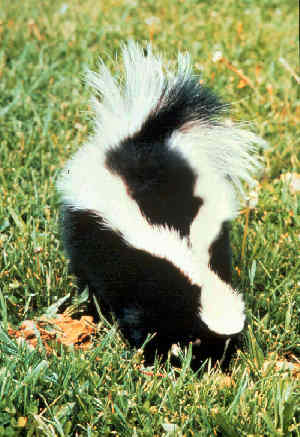
This unique form of Earth Care Products Mineral can be sprinkled directly on your pet, as well as inside and out side to eliminate skunk odors. Clear The Air does not have to come into contact with the odor producer; it will pull the odors from the entire area. Clear The Air draws in odors like a powerful magnet. The odors are adsorbed, and neutralized without any fragrances. Clear The Air does not cover up odors; it literally ”clears the air“ leaving the air fresh and clean.
Clear The Air is made from an all natural mineral, is non toxic and biodegradable and safe for Planet Earth. It is safe around children and pets even if eaten. Granules are totally safe for all lawns and vegetation. No need to remove granules from your lawn or vegetation, as they provide an excellent time-released nitrogen fertilizer.
-
Diet Tricks For Your Pet’s Health
Posted on June 13th, 2013Just like a large percent of American humans, American’s pets are overweight or obese.
While a cat or dog might look cute with some extra pounds on him, it is not healthy for him.
Clear The Air knows it is important to keep your pets healthy and avoid and medical risks. One major way you can do this is by monitoring what your pet eats. Here are some helpful tips for maintaining your pets’ diet:
- Provide more smaller meals for your pet rather than one or two large meals.
- Take away the self-feeders. Having food set out for your pets all the time is just asking for your pet to overeat and gain weight. Feed your pet at appropriate meal times.
- If your dog is begging for food, pet him instead. All your dog really wants is attention. Avoid the connection between begging and receiving food. Especially from the dinner table!
- Get some exercise! Providing routine exercise for your dog is a great way to keep his health up and stay in shape.
- If your dog acts hungry, provide a small snack for him. For example, instead of filling a cup of his kibbles and pouring it into his bowl, just give him 10-15 kibbles instead.
- Provide your pet with veggies as a treat. If your dog is like ours, he’ll eat anything! Try giving him some baby carrots, broccoli, celery or asparagus.
- Always provide fresh water for your pets. We suggest having multiple bowls and dishes of water throughout the house. If you have cats and dogs, make sure you provide your cats with small bowls on counters or high up places your dogs cannot reach.
Do you have any tips for feeding your pets? Please comment and share with us at our blog!
-
Avoid Doggy Destruction – 5 Ways To Keep Your Dog Happy While You’re Away
Posted on June 10th, 2013We all have to work and sometimes our dogs have to get left at home while we are away.
Check out these great ways to keep your dog entertained while you are away and he is home alone from Clear the Air:

- Lots of walks – It is a great idea to take your dog for a walk before you go off to work. Not only will he be able to go potty to reduce the chance of an accident but you two will get to spend some quality time together. You might want to throw the ball and include some playtime in your walk to tire him out so he can relax while you are at work.
- Toys – Introducing a new toy while you he is home alone can add some excitement to your dog’s life. A chew toy that your dog has to work out while you’re gone is the best. Try hiding toys for a few days and reintroducing it to him as well. Toys such as a Kong or food cube will encourage your dog to stay active while trying to work at getting the treat out of the toy. Even the laziest of dogs may not be able to resist a toy that gives them yummy treats when they play with it.
- Water – Making sure your dog has enough water while you are gone is extremely important. A dog fountain provides a constant supply of clean fresh water and many dogs love the diversion that a fountain can create.
- Sound – When you are out, leave on a CD or tune the radio to a clear station and let it play while you are out. This will not only feel like he isn’t alone but the noise will keep him company as well.
- Comfortable Bed – Create a comfortable place for your dog to relax. He will most likely want to snooze while you are away and making his spot inviting and comfortable will help keep him a good boy while he’s along.
-
Whiskers – What Does Your Cat Use Them For?
Posted on June 5th, 2013Whiskers are a very important part of your cat’s body. Whiskers, like hair and nails, fall out and are replaced.
Whiskers are different from your cat’s body hair. They are two to three times thicker than your cat’s hair and are rooted very keep in your cat’s face into an area which is rich in nerves and blood vessels.

Cats have whiskers on their checks as well as shorter ones above their eyebrows, on their chin and on the back of their front legs. A cat’s facial whiskers are good for navigation, mood indication, and measuring an opening.
Whiskers help a cat feel his way around and are so sensitive they can detect the slightest directional change in a breeze. This helps a cat at night slink away through a room and not bump into anything.
Whiskers serve another purpose besides acting as guidance, tracking, and radar systems – they also serve as a kind of barometer for the cat’s moods. But if you see the whiskers suddenly bunch up and lay flat against the cat’s face — that may be a sign that the cat is scared.
The whiskers also make it pretty easy to tell when a cat is startled or excited, because every hair on its body will be standing on end, including the whiskers, which will point almost completely forward.
If the cat is happy, curios or content, his whiskers are more relaxed and can even be pushed forward. Perhaps when playing “chase the toy” with a cat, you’ll notice its whiskers are pointing forward. This is probably its “game face,” a sign that your cat is in hunting mode.
Whiskers on a cat are primarily used to help a cat judge whether or not he’ll fit through an opening. A cat’s whiskers are roughly as wide as his body – being used as sort of a natural ruler.
Whisker tips are sensitive to pressure. You’ll most likely see a cat stick his head in and out of an opening before he puts his body in it. By doing this, he judges the width of the opening to see if he can fit.
Whiskers are a vital part of a cat’s mobility and sense of security. Without whiskers, cats would not be able to achieve the great acrobatic feats that are so awe-inspiring, or protect themselves from dangerous situations.
What other facts do you know about a cat’s whiskers? Please comment on our blog to share with us!
-
5 Ways To Save Energy For Pet Owners
Posted on June 3rd, 2013Tips for leaving your pet at home during the summer months.
If you leave your pet at home during the day, you may leave your air conditioner on to make sure your pet is comfortable. Clear The Air would like to share some great tips for pet owners when it comes to saving energy:
- No need for ceiling fans. While they keep us more comfortable, cats and dogs do not have sweat glands like us so the fan has no cooling effect on them.
- Program your thermostat. Set your thermostat to a different temperature when you are out. Depending on your pets’ breed, your pet may not need as much heat or air conditioning on. In most cases, setting your thermostat a little warmer during the summer months while you are at work will still keep your pet comfortable but won’t break the bank.
- Turn your lights off. Having lights on during the day is not necessary. Dogs and cats can manage in dim or dark conditions just fine. If you want your lights to come on in the evening, put them on a timer to save electricity.
- Fix a leaky faucet. While your cat may enjoy drinking out of that leaky faucet, you are driving up your water bill. Leave a couple water dishes around the house for your dog and cat to drink out of.
- Don’t leave the TV on. Instead of providing company with the noise of the TV, try turning on the radio or buying some inexpensive toys that your pet has to work to get a treat out of it. This will help pass time without upping your electric bill.
-
The Pros And Cons Of Five Odor Removal Methods
Posted on May 31st, 2013This is a summary of the most common odor eliminators. I saved the best until last!
Masking Agents: These are typically fragrance cakes, candles, plug-ins and sprays.
Pros:Acts immediately, who does not love the yummy smell of a good candle.
Cons:Often is so strong that it is worse than the offending odor. Not great for people with allergies or sensitivities, not long lasting.

Contact Odor Control: Enzyme based products, also called live bacteria or biodegeneration. These come in liquid and sprays.
Pros:They work quickly on airborne odors when sprayed.
Cons:They must come into contact with the odor source to work. So if there is urine on carpet, you must pull up the carpet, padding, and soak the floorboard, padding and carpet for the product to work. May take a few hours to get rid of the surface odors. Since they are liquid they are often messy to work with.May be harmful to pets or children if touched or eaten.May stain the material one uses it on.
Ozone Machines: These machines are often used in hotel rooms.
Pros:Because of safety issue we will only mention cons.
Cons:Poor performer unless used at very high levels where they are extreme health hazards, especially for people with breathing issues and around pets.We suggest you investigate the safety of these machines before using them at The California Air Resources Board and Environmental Protection Agency.
Time: Most odors will eventually go away with time.If odor is from a dead rat carcass it can take two weeks to over two months to dissipate.
Pros:Free
Cons:Who can stand the odor for any amount of time?
Anions: These work by a natural affinity of attraction between the odor molecules and the anion. The odors are pulled into the anions like a powerful magnet and then the odors are neutralized. Earth Care Products are an example of this type of odor eliminator.
Cons:Takes 2-24 hours to work. Some are hazardous to ones health if swallowed depending on the manufacturer.(however Earth Care is safe, even if swallowed.)
Pros:Eliminates odor does not mask odor. No perfume smell, great for people with allergies or sensitivities. Does not have to come into contact with the odor producer, so if there is urine on the carpet, simply sprinkle on top of carpet wait 48 hours and vacuum up.Earth Care is safe to use around children and pets, even if eaten. Earth Care is all natural and safe for planet earth.
-
The Marines Working Hard To Save Tortoises
Posted on May 20th, 2013Check out this great article from the Wall Street Journal about our marines saving the desert tortoises.
Such a great article about our Marines saving the Desert Tortoises! This article is from The Wall Street Journal.

The Few, the Proud, the Tortoises: Marines Protect Endangered Species
TWENTYNINE PALMS, Calif.—U.S. Marines are taught to overcome obstacles with a minimum of help. But when some Marines prepared to charge a hill in a training exercise here a few months ago, they were forced to halt and radio the one man who could help them advance: Brian Henen, turtle expert.
The troops were “running up the hill and firing at targets,” Mr. Henen said. “Some of the tortoises like the hill also. The Marines don’t want to hurt the tortoise, so they call us and we go in and move it.”
Mr. Henen, who has a doctorate in biology, is part of a little-known army of biologists and other scientists who manage the Mojave desert tortoise and about 420 other threatened and endangered species on about 28 million acres of federally managed military land.
“There’s a lot of people who don’t recognize the amount of conservation the Marine Corps does,” said Martin Husung, a natural-resource specialist on the base. “A lot of people think we’re just running over things.”
Instead, Mr. Henen often hustles out to remote parts of the Mojave Desert to make sure the threatened desert tortoise, which can weigh 10 pounds and live to be more than 50 years old, isn’t frightened by charging troops.
“When they get scared, they pee themselves,” Mr. Henen said, referring to the tortoises. Since tortoises can go two years between drinks of water, an unplanned micturition can cause dehydration and even death. So Mr. Henen sometimes demonstrates to troops how he soaks the reptiles in a pool until they drink enough water to plod on with their lives.
The tortoise isn’t the only animal benefiting from the limited hunting, high security and trained biologists on many bases. On the Navy’s San Clemente Island, biologists protect vulnerable loggerhead shrikes from hungry rats by installing metal “rat flashings” at the base of trees the birds nest in. In Texas, the Army creates protective nesting environments for endangered golden-cheeked warblers to fend off incursions by brown-headed cowbirds. And at Arnold Air Force Base in Tennessee, the once-endangered Helianthus eggertii, or Eggert’s sunflower, is doing so well it has been taken off the endangered list.
Congress ordered the Defense Department to protect the flora and fauna on its lands under the 1960 Sikes Act. Today, the military works with agencies like the Fish and Wildlife Service, a bureau of the Interior Department, to search for and protect animals, plants and archaeological sites on its bases.
At Fort Benning, an Army base near Columbus, Ga., gunfire and explosions regularly set off fires in the pine trees, said John Brent, the base environmental manager. Oddly enough, this is a boon for the red-cockaded woodpecker, a bird on the endangered species list that has made a comeback there.
The finicky woodpecker typically lives in longleaf pines at least 60 years old. The tree thrives on forest fires. “It needs fire to germinate and grow,” Mr. Brent said.
Outside the base, civilian agencies have long tried to prevent forest fires, and that ultimately hurts the pine population. Elsewhere, forest lands are disappearing amid rapid development.
All of this has the birds flocking to the base, Mr. Brent said. To help welcome the new tenants, Mr. Brent and others have been building bird “condominiums,” Mr. Brent said. For this they cut a hole about the size of a loaf of bread in an existing tree and slide in a cedar box to accommodate a nest. They can only do this once per tree because these picky birds prefer “condos, not townhouses,” Mr. Brent said.
“It’s a well-kept secret” that biologists are drawn to work on military bases, Mr. Brent said. “There’s a chance to do terrific work.”
Last year, the Department of Defense spent nearly $70 million on threatened and endangered species management and conservation, including $16.5 million on the red-cockaded woodpecker and just under $6 million on the desert tortoise.
The outlays let biologists survey habitats, tag and track animals, build hatcheries and provide ecological training to thousands of troops.
At Fort Irwin, an Army base near Barstow, Calif., Clarence Everly bumped along a dirt trail in a Dodge Ram pickup. The former Airborne Ranger is now the natural and cultural resources manager on base.
“Having been in the Army, it gives you some street cred” dealing with soldiers and the chain of command, he said. “You’re not just the environmentalist guy trying to prevent them from doing training.”
He drove out to meet a team of biologists from the U.S. Geological Survey on a 10-acre restricted area where lonely Joshua trees shook in 50 mile per hour winds.
This “is a great resource,” said Christina Aiello, a USGS scientist and Ph.D. student from Penn State University, trying to yell over the gusts of wind. “Blocking off areas, restricting access, it’s safe and secure and there’s no public access.”
She is part of a team doing research on how tortoises interact socially. She said their research is “like Facebook” as they track friend circles in the tortoise group.
Back at Twentynine Palms, Ken Nagy, a professor emeritus in biology from UCLA studying the reproductive habits of the reptiles, held a baby tortoise in one hand, its shell still soft.
They are like “walking ravioli” to predators, he said. A fenced-off section of the base covered by netting helps overcome the high mortality rate for young tortoises in the wild. Mr. Nagy’s program helps protect juveniles from birds and allows for research in a natural habitat.
Other parts of the military’s domain aren’t exactly natural but still offer the animals military-style protection.
On Fort Irwin, Mr. Everly peered through the window of his pickup at some targets in the distance—home to a surprisingly large tortoise population. “In essence, the live-fire ranges are protection for the tortoises,” he said, looking at a patch of ground where bullets often rain down but rarely hit the burrowing reptile. “Nobody goes out there.”
Check out the entire article here: http://online.wsj.com/article/SB10001424127887323798104578452941180687984.html?mod=wsj_valettop_email
-
7 Ways To Keep Your Pet Cool This Summer
Posted on May 17th, 2013The dog days of summer – what you can do to ensure your pet is safe from the heat.
We all love spending the long, sunny days of summer outdoors with our furry companions, but the ASPCA warns being overeager in hot weather can spell danger.
Take these simple precautions, provided by ASPCA experts, to help prevent your pet from overheating. And if you suspect your pet is suffering from heat stroke, get help from your veterinarian immediately.
- Pets can get dehydrated quickly, so give them plenty of fresh, clean water when it’s hot outdoors. Make sure your pets have a shady place to get out of the sun, be careful to not over-exercise them, and keep them indoors when it’s extremely hot.
- Symptoms of overheating in pets include excessive panting or difficulty breathing, increased heart and respiratory rate, drooling, mild weakness, stupor or even collapse. They can also include seizures, bloody diarrhea and vomit along with an elevated body temperature of over 104 degrees. Animals with flat faces, like Pugs and Persian cats, are more susceptible to heat stroke since they cannot pant as effectively. These pets, along with the elderly, the overweight, and those with heart or lung diseases, should be kept cool in air-conditioned rooms as much as possible.
- Never leave your animals alone in a parked vehicle. “On a hot day, a parked car can become a furnace in no time-even with the windows open-which could lead to fatal heat stroke,” says Dr. Louise Murray, Vice President of ASPCA Bergh Memorial Animal Hospital. Also, leaving pets unattended in cars in extreme weather is illegal in several states.
- Do not leave pets unsupervised around a pool-not all dogs are good swimmers. Introduce your pets to water gradually and make sure they wear flotation devices when on boats. Rinse your dog off after swimming to remove chlorine or salt from his fur, and try to keep your dog from drinking pool water, which contains chlorine and other chemicals that could cause stomach upset.
- “During warmer months, the ASPCA sees an increase in injured animals as a result of High-Rise Syndrome, which occurs when pets-mostly cats-fall out of windows or doors and are seriously or fatally injured,” says Dr. Murray. “Pet owners need to know that this is completely preventable if they take simple precautions.” Keep all unscreened windows or doors in your home closed and make sure adjustable screens are tightly secured.
- Feel free to trim longer hair on your dog, but never shave your dog: The layers of dogs’ coats protect them from overheating and sunburn. Brushing cats more often than usual can prevent problems caused by excessive heat. And be sure that any sunscreen or insect repellent product you use on your pets is labeled specifically for use on animals.
- When the temperature is very high, don’t let your dog linger on hot asphalt. Being so close the ground, your pooch’s body can heat up quickly, and sensitive paw pads can burn. Keep walks during these times to a minimum.
-
Amazing Dog Stories
Posted on May 8th, 2013Dogs who deserved an award!
Clear The Air loves hearing about stories of heroic animals and the risks they’ve taken to save someone.
We found some amazing dog stories from webvet.com we would like to share:
Eve – Many of us enjoy watching those movie scenes that have us sitting on the edge of our seats as someone escapes a burning pit just before it explodes, but in real life these situations are anything but enjoyable. In 1992, Kathi Vaughn, a paralyzed paraplegic, learned first-hand how horrifying this type of setting can be.
Kathi was driving along an interstate when her truck caught on fire. She pushed her rotweiller, Eve, out of the vehicle so she would be safe. However, the dog came back. Pulling her owner by the ankles, Eve managed to get Kathi out of the burning vehicle, dragging her to a nearby ditch just moments before the truck exploded.
Eve received the Stillman Award (for people and animals who risks their lives to save others), presented by the American Humane Association.
Honey – Michael Bosch and his English cocker spaniel, Honey, headed out early one October morning in 2005, with the sunshine beaming down brightly over California. Because of that brightness, Bosch’s sight was limited, causing him to misjudge the road. The SUV rolled 30 feet down a ravine, landing upside down. Bosch was trapped, and his leg was crushed between the steering wheel, roof and dashboard.
Living in a remote area, Bosch knew the chances of anyone having witnessed the accident were slim. He realized that Honey was his only hope. For seven long hours, it was just man and his dog. Finally, he managed to get his 5-month-old pet out of her kennel, which was in the back of the vehicle. Oh, how he hoped she would somehow find help!
Sure enough, Honey returned with a neighbor who lived about a half a mile away. The neighbor confirmed that Honey had directed her to the scene, where she paced back and forth gazing at the wreckage below. Rescuers acknowledged that, indeed, Bosch did owe his life to Honey, the pet he had adopted only two weeks earlier.
This heroic deed earned Honey the National Dog Day Foundation’s 2005 Dog of the Year Award.
Click the link to read more great stories at Webvet.com: http://www.webvet.com/main/2012/04/03/5-amazing-stories-hero-dogs